Average response time: under 24 hours
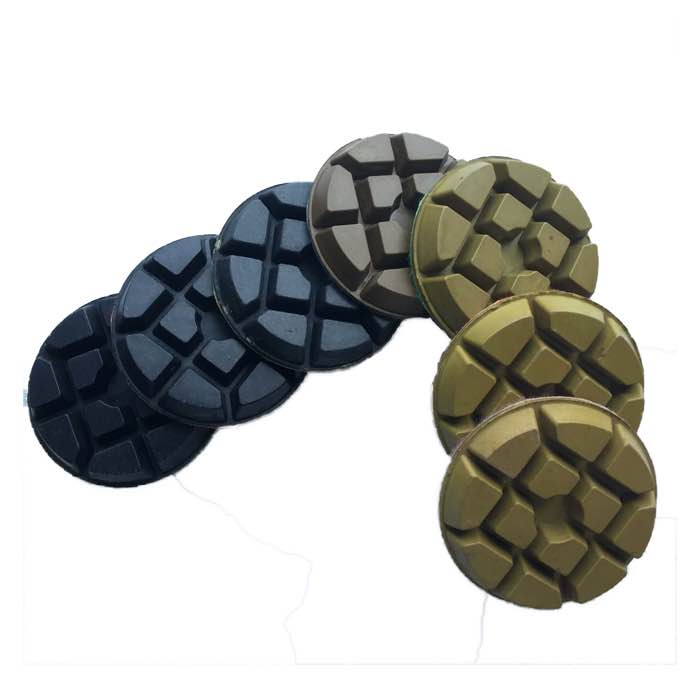
Resin polishing pads are a consumable product, but proper storage and handling can double their life. Store pads flat, dry, between 10 °C and 25 °C, out of direct sun. Clean each pad with a soft brush and water immediately after a job, let it dry 24 hours, and stack it by grit in the original plastic sleeve. Pads left in a wet bucket, in a hot truck, or stacked wet delaminate within weeks and lose 30–50 % of their expected life. A 400-grit pad that should last 800–1,200 m² commonly drops to 300–500 m² if abused.
| Factor | Good practice | What to avoid |
|---|---|---|
| Temperature | 10–25 °C | Truck deck in summer, unheated garage in winter |
| Humidity | < 60 % RH, dry | Wet bucket, slab floor, outside tarp |
| Orientation | Flat, original sleeve | Standing on edge, hanging by Velcro |
| Stacking | By grit, separated by plastic | Mixed grit pile, metal discs on top |
| Light | Closed box or cabinet | Direct sun, window-side |
A set of standard 4-inch resin pads cleaned after every job commonly lasts 2–3 jobs; abused pads often fail on the second job from delamination.
Smart crews keep a simple log: grit, job m², start date, end date. Typical pad life (clean concrete, correct pressure):
If your 800-grit pad drops below 500 m², look at storage, pressure, and water flow before blaming the product.
No. Once the resin layer separates from the Velcro backing, grit loss accelerates and the pad will scratch the floor. Retire it.
Bring pads into the office at night. Keep a heated crate on the truck with a thermometer. Do not mount a frozen pad — it snaps at the first pass.
Use low pressure (< 500 PSI). High pressure blasts the resin away and opens the surface pores.
2–3 years in sealed packaging under ideal conditions. Once opened, use within 12 months.
Smart crews rotate pad sets across jobs rather than running one set until it dies. A 400-grit set used on three 300 m² jobs lasts longer than a single set on a 900 m² job because each set gets cleaned, dried and rested between uses. Label each set with a job number and track m² accumulated. When a pad reaches 80 % of its expected life, retire it to a "backup" bin for touch-up work rather than putting it on a main job.
Resin pads contain diamond grit and a small amount of epoxy resin. They are not recyclable at most facilities; bag them with general construction waste. Do not burn them — fumes are toxic. Keep worn pads for a week after a job so you can inspect wear patterns if the customer reports scratches; they are your diagnostic record.
Pad storage is a profit center. A $40 pad that lasts 2,000 m² instead of 800 m² saves real money over a year. Build a small pad-cleaning station on the truck, keep a temperature-logged crate, and rotate stock by purchase date. For high-use grits, durable resin pads cleaned after every job will repay the care many times over.
Written and reviewed by JOY TECH - an SGS & BV audited, CE/RoHS certified diamond tools manufacturer founded in 2004, exporting to 50+ countries.
Our factory and quality management system are audited by SGS and Bureau Veritas. Products meet CE/RoHS requirements and every piece is 100% inspected before packing.
Verified Certificates
