Average response time: under 24 hours
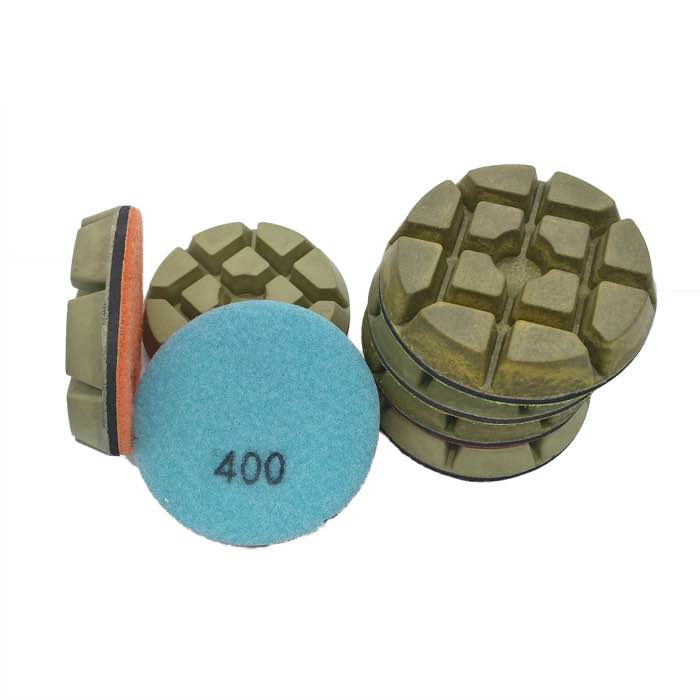
A dull polished floor is usually surface wear, not structural damage. Start by deep-scrubbing with a neutral cleaner and a red pad, then apply a light coat of densifier and let it react. Once dry, re-hone through 400, 800, 1500, and 3000 grit resin pads, then burnish dry at 1,500 to 2,000 rpm. Expect to restore 80 to 90 percent of the original gloss in one 8-hour day on a 200 m² floor. If the dullness is patchy, you skipped grits originally; if it is uniform, the densifier film has worn and needs rebuilding.
Three things steal the shine. First, abrasive grit from boots and carts micro-scratches the surface. Second, the densified paste wears thin in high-traffic lanes, opening pores that soak light. Third, cleaning chemicals with high pH leave a film that looks cloudy under overhead light. None of these require a new slab; all three are fixed by re-honing.
Age matters too. A floor polished 5 years ago under an older densifier chemistry will look flatter than today's lithium finishes, even with no visible wear. The earlier products were less reactive, and over time the top film softens under UV and foot traffic. Re-honing adds a fresh densifier coat that brings the slab back to the newer standard.
Another overlooked cause is over-wetting. Mopping with a saturated mop drives water into the pores, and as it dries it pulls salts to the surface. Those salts look like a white haze that no amount of burnish removes. Switch to a damp mop or auto-scrubber and the haze fades within weeks.
Walk the floor at night with a bright flashlight. If the dullness follows traffic lanes, it is wear. If the whole floor looks flat, the densifier film has aged. If there is a cloudy film that wipes off when wet, it is cleaner residue.
Splash water on a small area. Where water beads and stays, the densifier is intact. Where it sinks in within a minute, the slab needs re-densifying. Mark those zones; they get an extra coat.
Re-honing is a mini polishing job. You do not start at metal bond unless the floor is badly scratched. For normal wear, begin at 400 grit resin and climb. The JOY-RFP-01 resin polishing pads are the workhorse for 400 to 1500 steps on aged slabs.
Re-honing removes 0.05 to 0.1 mm of paste over the whole floor. That is enough to refresh the scratch pattern but not enough to expose aggregate on a thin-slurry slab. If your slab was polished to a very fine aggregate exposure, stay at 400 rather than dropping to 200; deeper cuts can change the look of the floor.
A high-speed burnisher will make a dull floor look brighter for a week, but it cannot cut micro-scratches. The gloss is a surface oil, not a diamond finish, and it wears off in days. Re-hone first, burnish last.
Acidic residue eats at the densifier and leaves the floor duller than before. Use neutral pH (7 to 9) cleaners only. Copper-bond transitional pads like JOY-RFP-C2 are useful if the floor has light metal marks that resin alone will not lift.
Re-honing without re-densifying leaves a soft surface that dulls again in months. The densifier is what makes the new finish last. Budget one extra day for the reaction time.
Once the gloss is back, switch to a dry dust-mop program, wet-mop weekly with neutral cleaner, and burnish high-traffic lanes every 3 to 6 months. Put mats at entrances to trap grit. A well-maintained polished floor needs a full re-hone every 3 to 5 years in commercial use; neglect it, and you are back to 400 grit within 18 months. Treat restoration as a refresh, not a one-time fix, and the slab will hold its value for decades.
Keep a written maintenance log. Note the date of each re-hone, the grit sequence used, the densifier batch, and any zones that needed extra work. That log becomes your best diagnostic tool next time the floor looks flat: you can compare traffic wear between cycles and decide whether a burnish is enough or a full re-hone is needed. Budget roughly 1 to 2 USD per square meter per year for an in-house crew, or 3 to 5 USD per square meter if you contract it out. Either way, it is a fraction of the cost of a new floor covering.
Written and reviewed by JOY TECH - an SGS & BV audited, CE/RoHS certified diamond tools manufacturer founded in 2004, exporting to 50+ countries.
Our factory and quality management system are audited by SGS and Bureau Veritas. Products meet CE/RoHS requirements and every piece is 100% inspected before packing.
Verified Certificates
