Average response time: under 24 hours
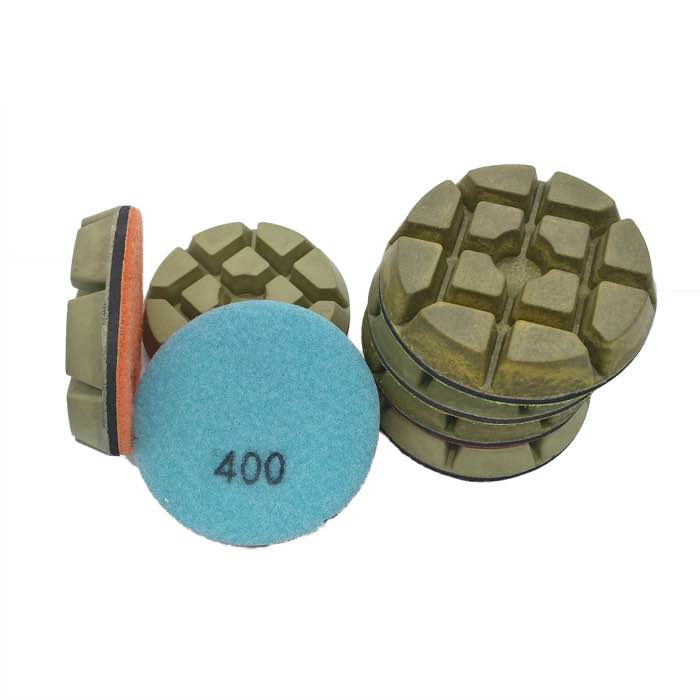
Dry polishing is the default for most modern commercial jobs: it uses a HEPA dust extractor, runs faster, and produces a cleaner resin-bond shine. Wet polishing uses water to cool the diamonds and wash the swarf away, which is useful on very hard aggregate, thick coatings or old floors where dust control is impossible. The finished look is nearly identical at the same grit, but wet produces a slurry you must collect and dispose of, while dry risks burning resin pads if you stay in one spot. Choose dry for a typical showroom or warehouse; choose wet when the concrete is abrading tooling too fast.
In dry polishing the grinder runs with a vacuum shoe and a HEPA extractor pulling concrete dust straight off the surface. The dust is collected in a sealed drum and can be swept up or disposed of as dry waste. Because no water is present, the resin bond in white resin polishing pads like JOY-RFP-04 heats up gently and produces a sharper optical shine, but it can also glaze over or burn if you linger on one spot. The operator watches for dark, burnt patches and lifts the machine off immediately.
Wet polishing floods the working head with water. The water keeps diamonds cool, washes cuttings away as grey slurry, and prevents dust from becoming airborne. Pad life on hard aggregate is longer because the bond is not being cooked, and the cut feels smoother. The trade-off is a slurry that must be vacuumed up with a slurry-rated unit, kept off electrical circuits, and disposed of as wastewater rather than dry waste.
At the same grit, both methods leave the same aggregate exposure and the same honed level. The visual difference shows up under strong light: dry polishing often yields a slightly deeper, sharper mirror because the resin bond is working at its softening temperature, while wet polishing can leave a faint haze if the slurry is not rinsed off between grits. Most specifiers cannot tell the two apart after a final burnish, but a contractor bidding for a museum or jewellery showroom should expect a dry final pass.
Pick the method on the first site visit, not halfway through the job:
Dry polishing is typically 20 to 30 percent faster per square metre because there is no time spent wetting, flooding and then mopping up slurry. Wet polishing wins back time on very hard concrete, where pad life doubles or triples and the operator does not stop every fifteen minutes to change tooling. On a 500 m² residential garage, dry is almost always quicker. On a 2,000 m² slab with flinty river gravel, wet tooling cost can beat the extra dry labour, even after paying for slurry disposal. Factor in the water and waste licences before you price a wet job; in some cities slurry is classed as special waste.
The worst outcome is a floor that is half wet, half dry. A wet patch left to dry on honed concrete leaves a cement paste film that the next dry pass cannot cut through, producing a blotchy finish. If you must switch, vacuum the area completely, let it dry for 24 hours, and start at 400 grit rather than continuing the grit progression.
A normal shop vacuum on a dry grinder passes fine dust straight through. You need a HEPA-rated extractor with a filter that captures 99.97 percent at 0.3 microns. Without it, the room turns white in minutes and the operator is exposed to crystalline silica. Pair the grinder with 8-triangle resin pads such as JOY-RFP-03, which distribute pressure evenly and reduce heat buildup compared with round pads.
Dry work demands PPE for dust: respirator with P100 filters, eye protection and hearing protection. Wet work demands slip warning, cable management away from puddles, and bunding around doorways so slurry does not run into adjacent rooms. In both cases, remember silica dust is a regulated hazard, and the chosen extraction or water suppression has to meet the local rule for respirable crystalline silica before the machine starts.
Use dry polishing for most commercial, retail and residential floors where dust extraction is available and a sharp final shine matters. Use wet polishing on hard aggregate, old dusty slabs, or when neighbours cannot tolerate a dry cut. Either way, finish the job consistently, and remember resin pads like JOY-RFP-02 are the stage where the dry versus wet choice shows up most clearly in the final gloss.
Written and reviewed by JOY TECH - an SGS & BV audited, CE/RoHS certified diamond tools manufacturer founded in 2004, exporting to 50+ countries.
Our factory and quality management system are audited by SGS and Bureau Veritas. Products meet CE/RoHS requirements and every piece is 100% inspected before packing.
Verified Certificates
