Average response time: under 24 hours
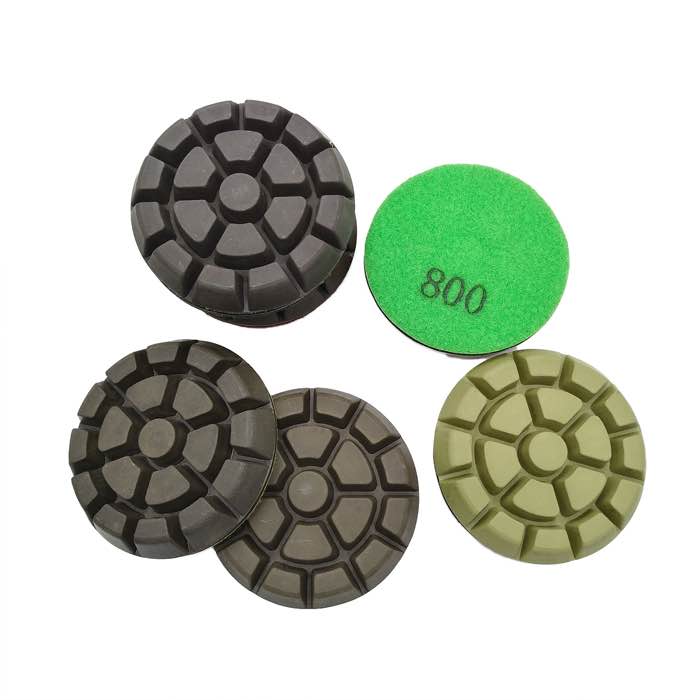
For a flooring or grinding business, private label diamond tools are primarily a financial instrument: they let you buy consumables at factory cost, set your own selling prices, and keep the tool specification locked regardless of distributor politics. In 2026 indicative terms, switching weekly burn items such as grinding shoes and polishing pads from retail brand stock to private label typically raises gross margin on tooling by 15-30 percentage points and removes two to four weeks of lead-time dependency on a local distributor. The advantage compounds because every reorder re-prices your whole floor-prep quote.
When you resell a branded diamond tool, someone else's margin is already baked into the price. Private label flips that equation:
| Channel | Indicative landed cost (2026) | Markup freedom | What you do not control |
|---|---|---|---|
| Branded retail / distributor | Manufacturer list price | Manufacturer-set | Price, spec, availability |
| Private label factory order | $0.8-$3 grinding shoe; $1.5-$5 resin pad | You set it | Only MOQ and delivery lead time |
| Your customer / bid price | n/a | Your floor-prep quote | Competitor rates |
The gap between the middle row and the top row is margin you keep: on a monthly consumable bill, private label usually turns a 30-40% reseller markup into a 55-70% own-brand markup at the same selling price.
Here is what most business owners miss: when the tool is your brand, your bid is protected against tool price inflation. A competitor re-buying branded shoes faces the distributor's next price increase; your private label contract locks the bond, grit and unit price for that production run. That lets you quote floor-prep packages with stable tool cost built in, win tight bids without shrinking margin, and explain to the client exactly what they are buying - your process, your tools, your warranty.
Distributor networks allocate stock by customer size, and smaller flooring firms often wait behind big tool shops when PCD tooling or popular grits run short. A direct factory relationship means your order slot is yours: production scheduled, quantity confirmed, reorders on a cadence you choose. The trade-off is planning - you must forecast quarterly instead of ordering weekly - but a steady contractor with predictable square-metre volumes forecasts easily.
Businesses that buy retail stock piecemeal end up running three bonds and four grit codes for the same job. Private label forces one decision once: choose the grinding bond, the transitional step and the resin sequence, then standardise it on every machine. The 3-Metal Bond Disc (JOY-TP3-B4) anchors the metal stage, ceramic transitional pads (JOY-RFP-T1) bridge to polishing, and resin pads (JOY-RFP-02) finish the line. New crews train on one system instead of relearning supplier quirks.
A: No. Most businesses run parallel for a few months: private label for the volume grinding and finishing stages, branded tools for one-off special jobs. Switch fully once your sample sets prove equivalent performance.
A: Yes, and that is the point of pricing power. Your cost base is factory-direct, so you can price the floor-prep stage more aggressively while keeping margin; the client sees your warranty, not a tool manufacturer's logo.
A: Written private label quotes fix unit price for that production run; repeat orders typically move with raw diamond and steel costs, announced in advance. Compare that with distributor list prices that change monthly without warning.
A: Yes - the bond and grit stay constant while backing plates change per machine brand. One specification, several mounting options.
The advantages of private label diamond tools for a business are not marketing advantages; they are accounting advantages: margin you keep, prices you set, supply you plan, and a tool line your whole crew runs the same way. Start with the consumable your team burns fastest, lock its spec with the factory, and let the margin difference fund the rest of the line.
Written and reviewed by JOY TECH - an SGS & BV audited, CE/RoHS certified diamond tools manufacturer founded in 2004, exporting to 50+ countries.
Our factory and quality management system are audited by SGS and Bureau Veritas. Products meet CE/RoHS requirements and every piece is 100% inspected before packing.
Verified Certificates
