Average response time: under 24 hours
The lasting benefits of a private label diamond tool program show up years in, not on the first invoice: customers begin asking for your label by name, reorders run on autopilot because the specification is locked, and a floor contractor who started as a consumable buyer can evolve into a regional supplier. In 2026 indicative terms, the typical setup cost for a first tool line - standard shapes with no custom tooling, plus logo marking - runs from a few hundred to a couple of thousand dollars, and most programs recover that within 6-18 months of steady reorders. The compounding benefit is control: spec, price, identity and stock, all yours.
Branded tools are someone else's asset - the client remembers the tool manufacturer, not you. Every private label job instead builds the same asset: a floor walked on by someone who saw your name on the grinding plate or pad box. Over two or three years of repeat work in one market, that repetition turns anonymous bids into invitations. The cost of acquiring that trust through paid marketing would far exceed the small per-unit branding premium.
Business owners constantly see cheaper listings for grinding shoes and pads. The trap: each new supplier quietly changes bond hardness, diamond concentration or segment height, and your crews relearn behavior that took months to calibrate. A private label spec locks bond code, grit, segment dimensions and backing; every reorder arrives the same. In 2026 indicative terms, the cost of switching suppliers and re-calibrating one grit series on a busy fleet often equals months of "savings" the switcher hoped to gain.
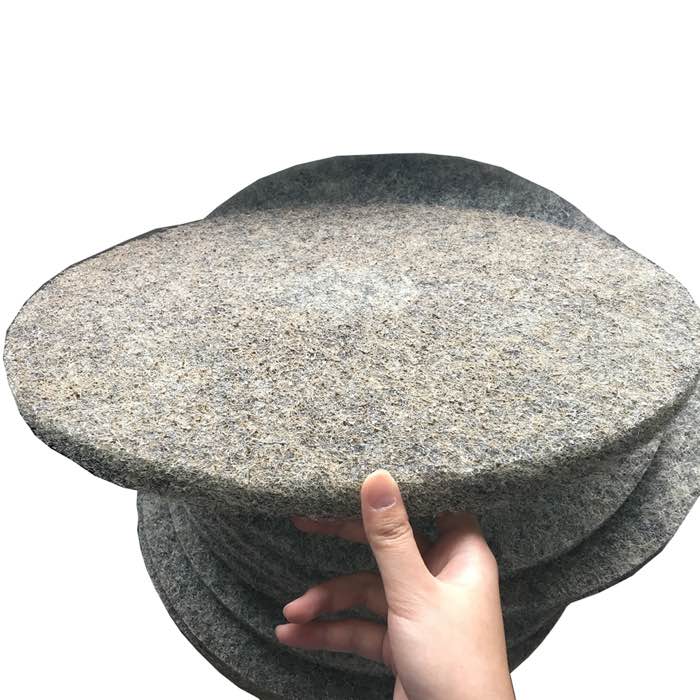
Big tool brands serve everyone and cannot optimise for one niche. Your label can: hard-bond shoes tuned to the local concrete of your region, a PCD line for the epoxy-over-tile jobs your crews run, or a burnishing sequence priced for the retail floors you polish weekly. Niche positioning lets you own a small category inside your market before any distributor notices. Resin polishing pads (JOY-RFP-01) and burnishing pads (JOY-RFP-BP2) are the easiest first niche because finishing results are visible to the client.
| Stage | Typical monthly tool consumption | What the private label program looks like |
|---|---|---|
| Year 1: own-crew use | 1,000-3,000 m² ground / polished | 1-2 standard categories, your logo, quarterly reorders |
| Year 2: stocking one market | 3,000-8,000 m² equivalent | Full grit line, sample sets traded to 2-3 local firms |
| Year 3: regional resale | 8,000 m²+ equivalent | Your label stocked at local counters or sold to smaller crews |
These are illustrative milestones; the actual path depends on how much of your region's flooring work you touch.
Two things scale the wrong way if neglected. First, reorder quality drifts when nobody checks incoming batches - appoint one person to test the first box of every new production run. Second, a brand with no written specification invites the factory to "improve" your formula silently; keep a spec sheet and update it deliberately, not by accident.
A: The consumable your crews burn fastest and whose performance clients can see - usually resin polishing pads or metal-bond grinding shoes. Low-volume items can follow once the line is stable.
A: It gives you leverage and a documented standard to compare factories against, plus the ability to move your spec to another manufacturer without retraining crews on a new product.
A: If the spec uses standard shapes with no custom tooling, yes. Custom segment tooling is the part tied to one factory - avoid it until the volume justifies it.
A: It creates a reason to choose you: the crew that solved your specific floor type before. Repeat clients come back to the name they saw on the tools that did the work.
The benefits of private label diamond tools for a business are cumulative: a brand that earns recognition one job at a time, a specification your operation never has to re-teach, and a staircase from consumable buyer to niche supplier. The move that unlocks the most is also the smallest - pick one high-volume tool, lock its spec, and let reorders compound for you.
Written and reviewed by JOY TECH - an SGS & BV audited, CE/RoHS certified diamond tools manufacturer founded in 2004, exporting to 50+ countries.
Our factory and quality management system are audited by SGS and Bureau Veritas. Products meet CE/RoHS requirements and every piece is 100% inspected before packing.
Verified Certificates
