Average response time: under 24 hours
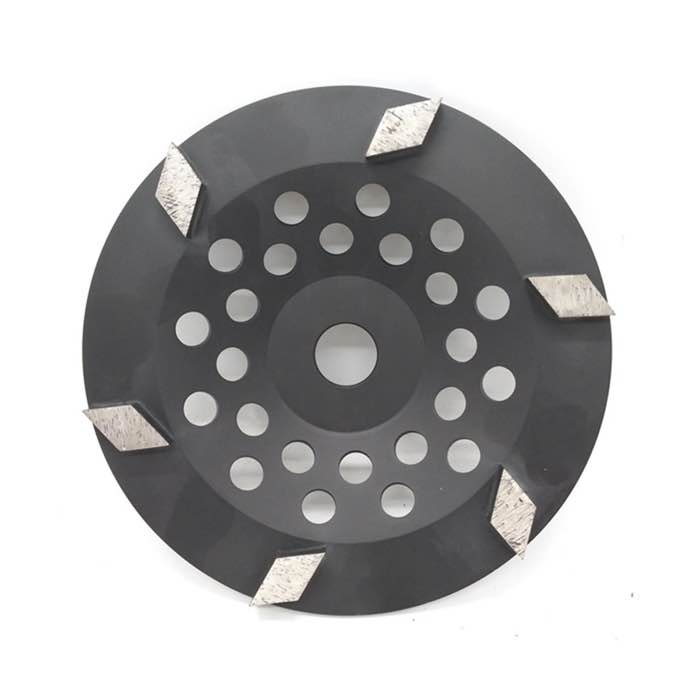
Grinding concrete removes the weak surface layer, levels high spots, exposes aggregate and creates a uniform surface profile, known as the CSP. That profile gives coatings something to grip and gives polishing a clean starting surface. Grinding also opens pores, removes laitance, glue and coatings, and changes the color by revealing fresh concrete. Physically, the surface becomes flatter, rougher at a micro level, cleaner and more uniform. For the right tooling on this job, see double rhombus grinding discs.
Fresh concrete has a weak, chalky top layer called laitance, formed when bleed water rises. Grinding removes it and exposes the dense, strong concrete underneath. This is why a ground floor dusts less and wears better than an unground one: the weak layer is gone. It also exposes a more uniform color, since the surface is no longer a mix of paste and fines. Related tooling is available in our triple round segment discs range.
Grinding takes down high spots, ridges, trowel marks and uneven joints. Overlapping passes with diamond segments bring the surface to a common plane, so water drains properly, floors meet specs and coatings lay flat. The flatness is checked with a straightedge or F-number tests on big floors. Grinding does not fill low spots; it removes the highs, which is why it is paired with leveling compounds on uneven slabs.
Every grind leaves a texture, rated by the CSP scale from CSP 1 (nearly smooth) to CSP 9 (very rough). Coarse metal-bond grinding creates CSP 3 to 5, the range most coatings specify for bonding. The roughness multiplies the surface area the coating touches, which is how a coating grips mechanically. If you grind too fine, coatings may delaminate; too coarse, and coatings need extra material to fill the profile. Choose the CSP your coating spec requires.
Grinding exposes the aggregate and opens the pores, which is what lets densifiers penetrate and lets stains take evenly. An unground, troweled surface is too tight for treatments to absorb; grinding opens it up. For polished concrete, grinding establishes the exposed-aggregate look and the clean base that the resin polishing stages refine. The double rhombus segment disc and similar tooling balance material removal with a controllable profile.
Grinding does not fill low spots, repair cracks or change the concrete's strength. It only removes material. Deep grinding can expose rebar if the slab is thin, which is why you check cover before grinding. It also creates dust that must be controlled, and it changes the surface color, which matters if the client wanted the original finish preserved. Know what you are removing before you grind.
A> Removing a thin surface layer does not weaken a slab, but grinding into the structural depth or exposing rebar does. Check slab thickness and rebar cover before deep grinding.
A: The ground surface exposes fresh paste and aggregate, and the fine scratches scatter light, making the floor read lighter. Wetting or sealing deepens the color again.
A: Most coatings specify a minimum CSP for bonding. Check the product spec; if it asks for a profile, you grind to create it, then clean and dry before coating.
Grinding transforms the surface: it removes the weak layer, levels the floor, creates the CSP that coatings need, and opens the surface for treatments. It does not fill or repair, so plan for leveling and patching separately. Understand what grinding does, control the profile, and every coating and polish you apply after it will perform.
Written and reviewed by JOY TECH - an SGS & BV audited, CE/RoHS certified diamond tools manufacturer founded in 2004, exporting to 50+ countries.
Our factory and quality management system are audited by SGS and Bureau Veritas. Products meet CE/RoHS requirements and every piece is 100% inspected before packing.
Verified Certificates
