Average response time: under 24 hours
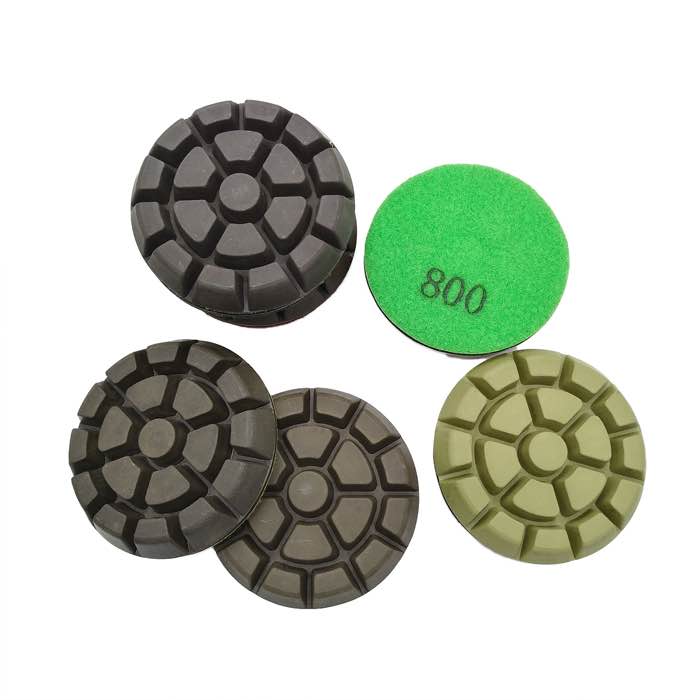
Concrete polishing pads wear out fast when resin pads are used on a floor that still needs metal grinding, grits are skipped so coarse pads grind for too long, or the machine runs with excessive pressure and RPM. Prepare the floor with metal-bonded discs first, run the correct grit sequence, and use transition pads for the gap between metal and resin stages — pad life climbs and cost per square metre drops.
Resin pads are finishing tools. They cut fine scratches and polish; they are not built to remove concrete. Fast wear usually comes from:
The fastest way to extend pad life is to stop using resin pads for metal work. Use metal-bonded trapezoid discs for grinding, levelling and removing old coatings, then switch to resin pads only for smoothing and polishing. On a well-prepared floor, resin pads like our diamond resin floor polishing pads can run for many passes; on an unprepared floor they die in one.
Jumping from metal segments straight into fine resin pads is the classic killer. Transition pads — hybrid, copper or ceramic bond — bridge the gap. They cut fast like metal but finish like resin, and they protect your expensive finishing pads. Add copper-bond transition pads or ceramic transition pads at the 100-400 grit stage, and your fine resin pads will last dramatically longer.
| Setting | Fast Wear Cause | Recommended |
|---|---|---|
| Pressure | Heavy pressing erodes resin | Moderate; let the diamonds cut |
| RPM | Very high RPM burns pads | Rated range, consistent passes |
| Speed | Stopping and scrubbing one spot | Steady overlapping passes |
| Water | Dry-running resin pads | Wet up to 800 grit, dry final burnish |
Match the pad bond to the floor. Soft floors (low PSI) need harder bonds that hold diamond; abrasive floors with quartz aggregate need softer bonds that self-sharpen. If pads glaze, step to a softer bond; if they erode in hours, step harder. Ask the manufacturer for a bond recommendation for your floor's PSI and aggregate — it is the single biggest lever on pad life.
A: On a well-prepared floor, 300-800 m² per set is realistic. Below that, check whether metal work or pressure is wearing them early.
A: Even, fast wear usually means a bond too soft for the floor or too much pressure. Step up bond hardness and ease the pressure.
A: Ceramic transition pads suit most floors between metal and resin stages; for very hard or very soft slabs confirm the bond with the supplier.
A: For a professional finish, yes. Metal segments shape the floor; resin pads refine it. Skipping the metal stage destroys resin pads and the finish.
Fast pad wear is a stage and bond problem. Prepare with metal, transition with hybrid or ceramic, and finish with resin at the right pressure. Track cost per square metre instead of pad price — the correct sequence spends less on pads and finishes more floor.
Written and reviewed by JOY TECH - an SGS & BV audited, CE/RoHS certified diamond tools manufacturer founded in 2004, exporting to 50+ countries.
Our factory and quality management system are audited by SGS and Bureau Veritas. Products meet CE/RoHS requirements and every piece is 100% inspected before packing.
Verified Certificates
