Average response time: under 24 hours
Polished concrete looks hazy or dull when one of four things went wrong: grits were skipped so the scratch pattern was never refined, the densifier was skipped or applied too late, the floor was polished with too much or too little water, or patch areas were ground unevenly and now ghost through the finish. Fix it by going back to the coarsest visible scratch, re-running the grit sequence with proper densifier timing, and finishing dry for the final gloss.
Gloss is the end of a controlled scratch-refinement process. Each grit must remove the scratches left by the previous one. Contractors see haze most often from:
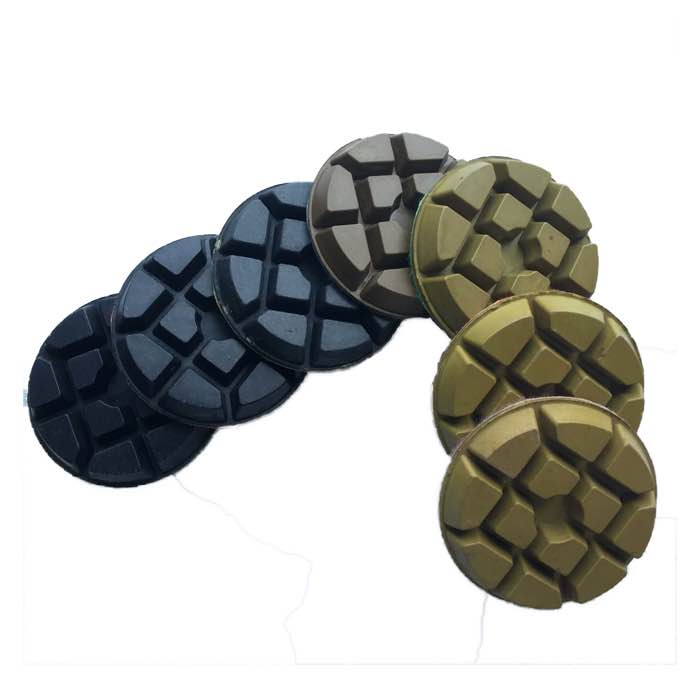
If the floor is hazy, identify the coarsest visible scratch with a flashlight at a low angle. Drop back to that grit or one coarser, and re-run the sequence — do not try to polish haze out with a fine pad, it only hides it temporarily. Use resin pads with a full grit progression on the resin polishing pads that match your floor type, and let each grit work long enough to remove the previous scratches before moving up.
Densifier hardens and closes the concrete so it can hold a burnish. Apply it after the coarse metal grinding (around 100-200 grit) and before the fine resin stages. If you apply it too early, the surface is too open; too late, scratches are already polished over. Work the densifier until the surface looks dry and slightly soapy, then continue the grit sequence. A floor that dusts and stains is almost always a densifier problem.
Resin stages can run wet up to about 800 grit to keep the pads cool, but the final 1500-3000 grit burnish should run dry (or with a mist) so the resin friction produces the gloss. Running the last stage wet is one of the most common causes of a dull finish. For the deepest gloss, finish with a ceramic transition pad then a white burnishing pad.
Repairs ghost when the patch is harder, softer, or a different colour from the slab. Level the patch, grind it flush at coarse grit, and match the densifier application. In severe cases you may need to grind the whole area back to a uniform surface. If ghosting appears only at high grits, dropping back one grit usually smooths the transition.
A: Uneven grinding or inconsistent densifier coverage. Even out the grind across the full floor and apply densifier at the same rate everywhere.
A: Yes — re-run from the coarsest visible scratch over the affected area, finish dry, and burnish. Haze is a scratch-refinement failure, not a floor defect.
A: For a polished finish that holds gloss and resists dusting, yes. Low-PSI floors especially need densifier to reach a durable shine.
A: The surface was not densified or the final passes were wet. Close the surface with densifier and burnish dry with a white pad.
Haze is almost always a process problem — skipped grits, mistimed densifier, or a wet final pass. Go back to the scratch, run the full sequence, densify on time, and burnish dry. Do that and the gloss comes back without buying new pads or starting the floor over.
Written and reviewed by JOY TECH - an SGS & BV audited, CE/RoHS certified diamond tools manufacturer founded in 2004, exporting to 50+ countries.
Our factory and quality management system are audited by SGS and Bureau Veritas. Products meet CE/RoHS requirements and every piece is 100% inspected before packing.
Verified Certificates
