Average response time: under 24 hours
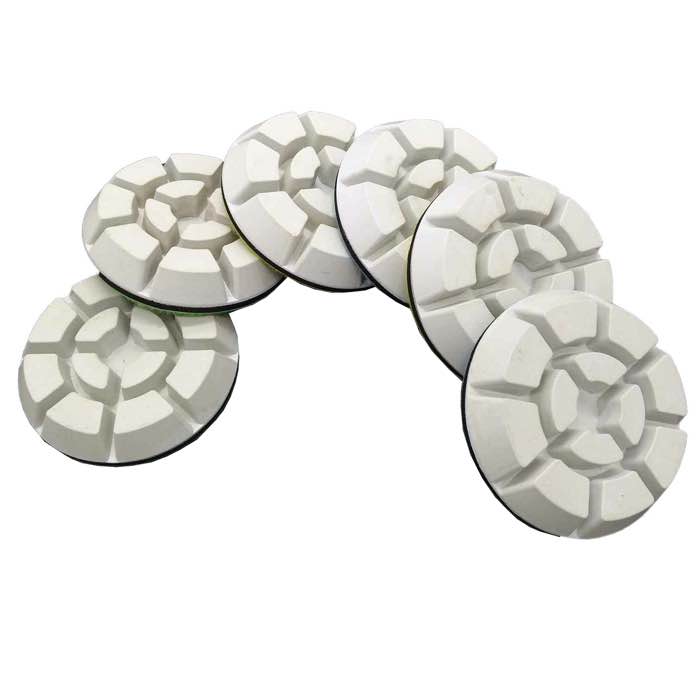
Haze after the final step means light is scattering instead of reflecting: the pores are open, a grit step was skipped, the pads were dirty, or the burnish was done wrong. Fix it by identifying the cause, then re-densifying, re-polishing the last two steps, or burnishing again on a clean floor.
Polished concrete is glossy because the pores are closed and light reflects off a dense surface. If the floor was polished without densifier, or densifier was applied too late, the pores stay open and the floor looks milky or hazy rather than shiny. The fix is to apply densifier correctly, let it cure, then repeat the 1500-3000 polish to close the surface.
Skipping a grit (for example, jumping from 200 to 800 resin) leaves scratches from the coarser step that the fine pads cannot remove. Under raking light those scratches appear as a uniform haze. Go back to the skipped grit, run it fully, then step forward again in order. Never jump more than one grit level on a floor destined for a high gloss.
Dust, sand, or residue on the pads or floor between steps acts as an abrasive that leaves micro-scratches, which show up as haze on the gloss. Clean the floor with a vacuum and damp mop before every resin pass, and clean or replace pads when they load. A single grain of sand in a 3000-grit pass can haze a whole section.
The final burnish should be done dry, with a clean white or natural-hair pad, on a fully polished and densified floor. If the burnish was run too fast, too wet, or on a floor with residual dust, it can burn or smear the surface into a haze. Re-burnish a clean section and compare; if it clears, the whole floor needs the same clean burnish pass.
Step 1: check with raking light for coarse scratch patterns; if present, re-run the last two grits. Step 2: check the gloss after a re-burnish on a clean, dry section; if the haze is still there, the pores are open, so densify and re-polish. Step 3: check pad condition; replace loaded pads. Work through the causes in this order and the haze resolves.
A> That section likely got a dirty pad, uneven passes, or skipped a grit during the sequence. Re-polish just that zone with the correct steps.
A> Only if the surface itself is clean and dense. If the pores are open or scratches remain, burnishing will not remove the haze.
A> Wax can temporarily fill surface imperfections, but it dulls and needs maintenance. Fix the underlying cause for a lasting gloss.
Haze is a symptom with a small set of causes: open pores, skipped grits, dirty pads, or a bad burnish. Diagnose with raking light, correct the specific cause, and re-run the final steps cleanly. The gloss returns when the surface is dense, scratch-free, and burnished on a clean floor.
Written and reviewed by JOY TECH - an SGS & BV audited, CE/RoHS certified diamond tools manufacturer founded in 2004, exporting to 50+ countries.
Our factory and quality management system are audited by SGS and Bureau Veritas. Products meet CE/RoHS requirements and every piece is 100% inspected before packing.
Verified Certificates
