Average response time: under 24 hours
Construction companies that prepare and polish concrete floors switch to private label tooling for operational reasons: predictable consumable cost per square metre, your own logo and warranty visible on the jobsite, and one reorder system that keeps every crew supplied without distributor shopping. In 2026 indicative numbers, a mid-size flooring crew burns roughly $400-$1,200 a month on grinding shoes, PCD tools and pads; private label sourcing usually trims that by 20-35% while shortening reorder lead time from weeks to a scheduled production slot. The case is strongest for firms running three or more crews, or one grinder fleet spread across multiple sites.
A construction business does not "start a brand" - it replaces anonymous retail consumables with tools carrying its own name and backed by its own warranty. Practically, three things change on site: the grinding plates arriving at the yard already match your machines (no mid-week supplier run), the logo on the tool is yours when the client walks the floor, and failed pieces are handled by your own QC record rather than a manufacturer's claim process. For a construction firm, that is operational control, not marketing.
Estimators hate consumables that vary month to month. Private label fixes the unit cost, so the floor-prep line in your bid stops being a guess:
| Job type | Indicative tool budget per m² (2026) | Private label effect |
|---|---|---|
| New slab grinding / opening | $0.4-$0.9 | Locks the number for quarterly bids |
| Coated slab prep (epoxy / paint) | $0.8-$1.6 | Biggest savings - retail PCD is expensive |
| Full polish package | $1.2-$2.2 | Consistent grit sequence, no pad surprises |
When the tool cost in your bid is a known number instead of a guessed buffer, you quote sharper and lose fewer jobs on price.
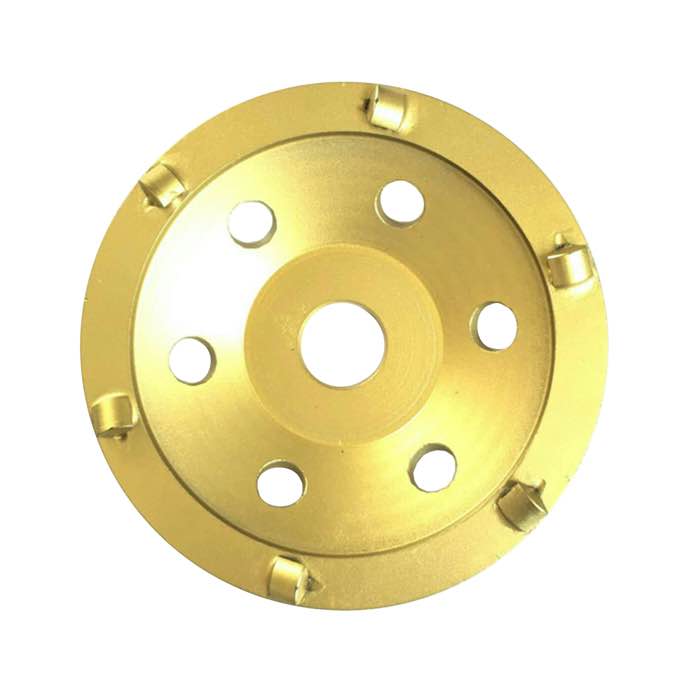
Your logo on a grinding plate sounds cosmetic until a subcontractor photographs the floor. Clients increasingly ask who performed the preparation; a machine wearing your branded shoes answers that question before anyone speaks. Just as important, the warranty moves to you: instead of explaining a tool failure to a tool manufacturer, you hold the factory's batch records and your own replacement commitment. PCD cup wheels (JOY-CW-PCD6) and fast-change epoxy-removal rollers (JOY-BHP-FC) are the visible, high-ticket items where this branding reads strongest on site.
Running several crews on different brands of grinder makes retail stock messy - one crew waits for a supplier delivery while another overstocks. Private label planning standardises the cabinet:
Inventory turnover becomes a planning exercise, not an emergency shop run.
Start with the crew that grinds most weeks and owns two or more machines of the same connection type. Pilot it on warehouse prep, where consumable cost is highest, before rolling it to edge work or small decorative jobs. The goal in year one is not a perfect brand - it is a dependable consumables pipeline.
A: A practical rule is two weeks of average consumption per job stage - enough to finish a started job, not enough to tie up cash. Private label MOQs are sized so a quarterly buy covers that buffer.
A: It changes only the backing plate list. The diamond spec stays the same; the factory supplies plates for HTC, Husqvarna, Lavina and EDCO connections under your label.
A: Usually the opposite - clients see a contractor standing behind its own equipment. Pair the logo with a short warranty card and the tool reads as professional, not generic.
A: Repetitive slab preparation - warehouses, retail floors, parking decks - where volume justifies the MOQ and consistent bond performance protects repeat contracts.
For a construction business, private label diamond tools are a way to run jobs: predictable bid numbers, crews that never wait on a supplier, and equipment wearing your name across every site. Pick your busiest crew, private-label its highest-consumption stage, and expand as consumption data confirms the savings.
Written and reviewed by JOY TECH - an SGS & BV audited, CE/RoHS certified diamond tools manufacturer founded in 2004, exporting to 50+ countries.
Our factory and quality management system are audited by SGS and Bureau Veritas. Products meet CE/RoHS requirements and every piece is 100% inspected before packing.
Verified Certificates
