Average response time: under 24 hours
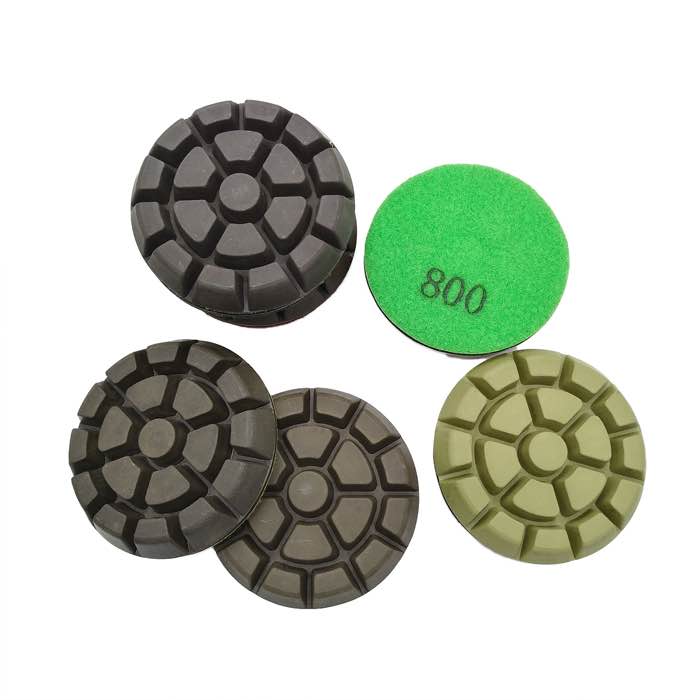
To polish concrete with a variable-speed polisher, use the speed dial as a tool selector: 1,500-2,500 RPM for coarse resin pads and edge work, 2,500-3,500 RPM for fine grits and the gloss passes. Work wet with velcro-backed resin pads, keep the pad flat and moving, and follow the grit sequence from coarse to fine (100, 200, 400, 800, 1500, 3000). The variable speed exists to protect the resin from overheating at fine grits and to let you feather edges — not to change how hard you press.
Resin pads have a speed window. Too slow and they do not cut, just drag and smear; too fast and the resin overheats, glazes, and burns the surface with dark marks. A fixed-speed angle grinder (10,000+ RPM) is useless for resin polishing — it melts the pads in seconds. The variable-speed polisher, typically 1,000-4,000 RPM, lets you match the speed to the grit and the job. It also lets you slow down for edges, where high speed spins the pad off the profile and burns the concrete.
Fit a velcro backing pad matched to the pad diameter, and use diamond resin floor polishing pads in the full grit range. Match the backing plate and pads exactly — a pad larger than the plate flops and waves the finish. For edges and profiles, a smaller backing pad (3 inch) reaches into corners better than a 4 or 5 inch plate. Check the pad velcro and backing condition before each stage; worn velcro lets the pad slip and leaves a streaky surface.
Wet polishing is the default: spray water on the surface or the pad, keep it wet, and let the slurry do the fine work. Dry polishing with resin pads works on small areas but generates heat fast — the variable speed is the only thing protecting the pads, so stay at the low end of the range.
Keep the pad flat and moving — dwell spots overheat the resin and burn the concrete. Overlap each pass by half the pad and check the surface at a low angle for skipped areas before changing grit. The full progression logic is covered in concrete polishing grit progression.
Slow the speed to 1,500-2,000 RPM for edges and profiles so the pad follows the shape instead of bouncing off it. For patches on a finished floor, blend the patch by working the coarse grits over the patch and feathering into the surrounding floor before the fine grits. Matching a small repair to an existing polished floor follows the same blending logic as fixing scratches on polished concrete.
After the final grit, clean the floor completely and burnish with a clean 3000 pad and water. If the gloss dulls later, a burnishing pass restores it without re-polishing.
1,500-2,500 RPM for coarse grits and edges, 2,500-3,500 RPM for fine grits and gloss. Match the speed to the grit; a fixed-speed grinder is too fast for resin pads.
Only if it slows to about 4,000 RPM or less and takes a backing pad. Most angle grinders run 10,000+ RPM and burn resin pads; a dedicated concrete polisher is the reliable tool.
Wet is best — water cools the resin and carries the slurry that refines the gloss. Dry polishing works for small areas at low speed but heats the pads fast.
Too much speed or too long in one spot overheated the resin. Slow down, keep the pad moving, work wet, and use clean pads for the fine grits.
A variable-speed polisher turns a grinder into a finishing machine when you use the dial correctly: slow for coarse grits and edges, faster for fine grits and gloss, always wet and always moving. Match the pads to the backing plate, clean between grits, and burnish at the end. The result is a glossy, even polish on floors, edges, and patches — with no burned resin and no skipped steps.
Written and reviewed by JOY TECH - an SGS & BV audited, CE/RoHS certified diamond tools manufacturer founded in 2004, exporting to 50+ countries.
Our factory and quality management system are audited by SGS and Bureau Veritas. Products meet CE/RoHS requirements and every piece is 100% inspected before packing.
Verified Certificates
