Average response time: under 24 hours
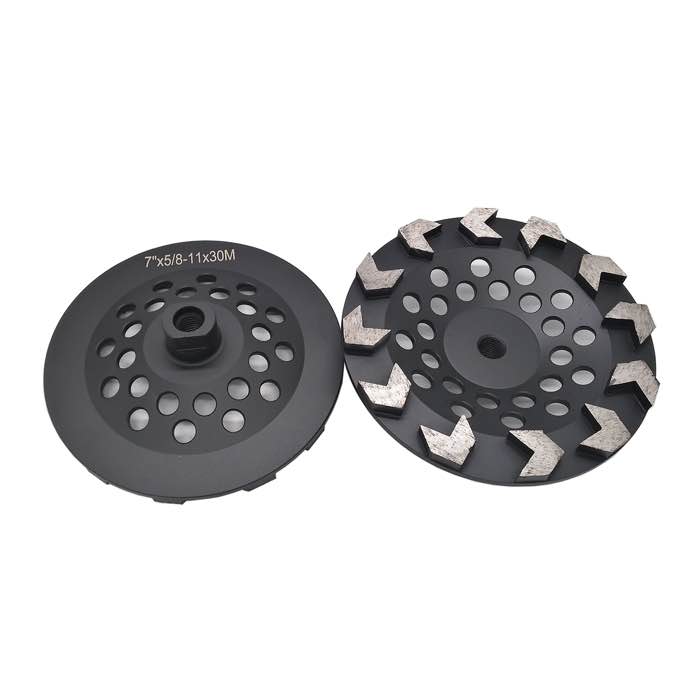
To grind concrete with a diamond cup wheel, mount the wheel on a handheld angle grinder with the correct arbor and guard, hold the grinder flat so the full face of the wheel contacts the concrete, and move in straight overlapping passes at steady speed. Let the wheel weight cut — do not press. Start coarse, keep the surface moving, and check your work with a straightedge. A cup wheel is a grinding tool, not a gouging tool: keeping it flat is the entire technique.
Cup wheels come in different segment designs and grits. A double-row or turbo cup wheel removes material fast and runs cooler; a single-row wheel cuts faster but rougher; finer-grit wheels (80-120) smooth the surface. For most first-pass work on concrete, a diamond grinding cup wheel in 30-40 grit strikes the right balance.
Match the wheel diameter to the grinder: 100 mm for tight work, 125 mm for general use, 180 mm for maximum coverage. Check the arbor size (M14 or 5/8") before mounting. Inspect the segments for cracks or missing pieces before each use — a damaged wheel can shed segments at high speed.
Fit the wheel with the correct guard for its size, tighten it firmly, and run it free for a few seconds before touching concrete. Wear eye protection, hearing protection, and a dust mask or respirator. Hook up a dust shroud if you have one — cup wheels produce a lot of dust (see concrete grinder dust collection hookups).
Mark the area you need to grind and clear the floor of loose debris. A nail or bolt head will destroy a cup wheel instantly, so sweep first.
The single most important habit: keep the wheel flat on the floor. Tilt the grinder and the wheel edge digs a groove; hold it flat and the whole face shares the cut. Use your free hand to guide, not press. Move in straight lines, overlapping each pass by half the wheel width, and change direction between passes so the scratch pattern crosses.
Let the wheel's weight do the work. Pushing harder does not cut faster — it overheats the wheel and leaves deeper marks. If the wheel slows or stops cutting, it is either glazed or loaded; dress it on a piece of abrasive block or switch to a sharper grit.
For edges and corners, work carefully with the wheel edge and finish with a small disc or hand pad. The same flat technique applies everywhere — see how to grind concrete smooth without leaving ridges.
Run the grinder at full speed and control the feed rate. Fast passes leave material, slow passes cut deeper — find a steady pace and keep it. Coarse grit removes material and exposes aggregate; switch to a medium or fine grit only when the surface is flat. Check flatness with a straightedge every few passes. If you see shiny patches, laitance or coating remains — stay on coarse until the surface is uniformly matte.
A cup wheel is a stock-removal tool. For polishing, switch to resin pads on a variable-speed polisher rather than trying to polish with a cup wheel.
Yes. Fit the wheel to the grinder, hold it flat, and move in overlapping passes. Cup wheels are the standard handheld tool for concrete surface grinding.
30-40 grit for stock removal and leveling, 80-120 grit for smoothing. Coarse grit first, then finer grits once the surface is flat.
Keep the wheel flat on the surface and let the machine weight cut. Tilting the grinder onto the wheel edge is what creates grooves.
It is likely glazed or loaded. Dress it on an abrasive block, switch to a coarser grit, or check that the concrete hardness matches the wheel bond.
A diamond cup wheel is the fastest handheld tool for grinding concrete, but only when you keep it flat, overlap your passes, and let the machine work. Choose the right grit, mount it safely, and check flatness as you go. With this technique, a cup wheel levels, opens, and smooths concrete quickly — and leaves a surface ready for the next step.
Written and reviewed by JOY TECH - an SGS & BV audited, CE/RoHS certified diamond tools manufacturer founded in 2004, exporting to 50+ countries.
Our factory and quality management system are audited by SGS and Bureau Veritas. Products meet CE/RoHS requirements and every piece is 100% inspected before packing.
Verified Certificates
