

Gloss Meter Readings After Polishing: Consistency Factors
Gloss Meter Readings After Polishing: Consistency Factors
Quick Answer
Take gloss readings at the same angle, on a clean dry surface, at the same distance from the wall and after the floor has cooled. Use a 60 degree meter for general comparison and an 85 degree meter for high-gloss floors. Record several spots and average them; one reading is not a result.
What the Meter Measures
A gloss meter measures reflected light at a fixed angle. It does not measure surface profile or coating thickness. A floor can read high gloss and still have a scratch pattern that is visible under raking light.
Different angles suit different gloss levels. A 60 degree meter is common for medium gloss; an 85 degree meter is more sensitive to high gloss.
Reading Procedure
- Clean the surface with a dry cloth; water changes the reading.
- Let the floor reach room temperature; a hot floor reads differently.
- Take readings at fixed distances from walls and joints.
- Use the same meter and the same angle for every reading.
- Record five to ten spots and report the average and range.
Why Readings Vary
Variation comes from surface contamination, pad marks, densifier residue and the meter itself. A reading taken on a wet floor can be several points higher than the same spot when dry. A reading taken at a different angle is not comparable.
Frequently Asked Questions
Q: Can I compare readings from different meters?
A: Only if the meters are calibrated and used at the same angle. Different models can read differently.
Q: Should I read before or after densifier?
A: Read after the floor is dry and the densifier has cured. Wet densifier changes the surface.
Q: How many readings are enough?
A: At least five per room, more for large areas. Report the average and the range.
Conclusion
Consistency comes from fixed angle, clean surface and repeated spots. A white resin polishing pad helps produce an even final sheen; a refined polishing pad can lift the last step.
Products used in this guide
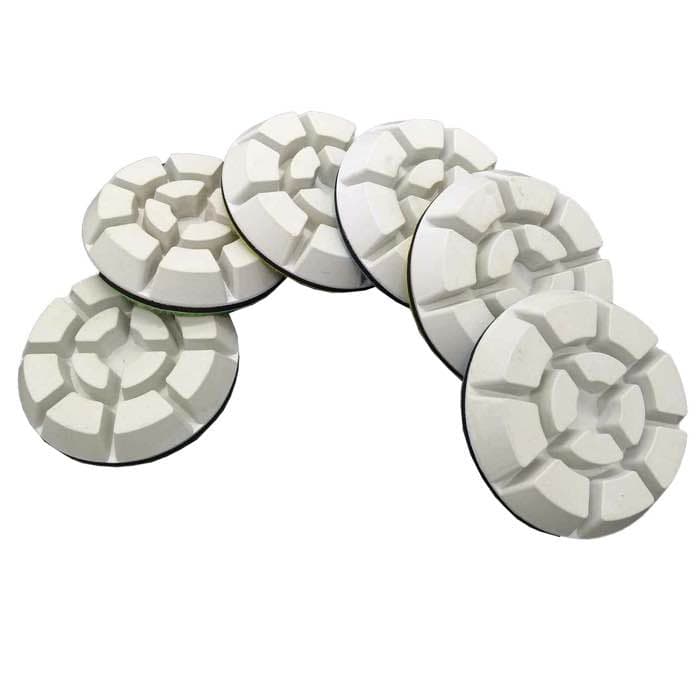
Diamond White Resin Floor Polishing Pads (JOY-RFP-04)
View specs →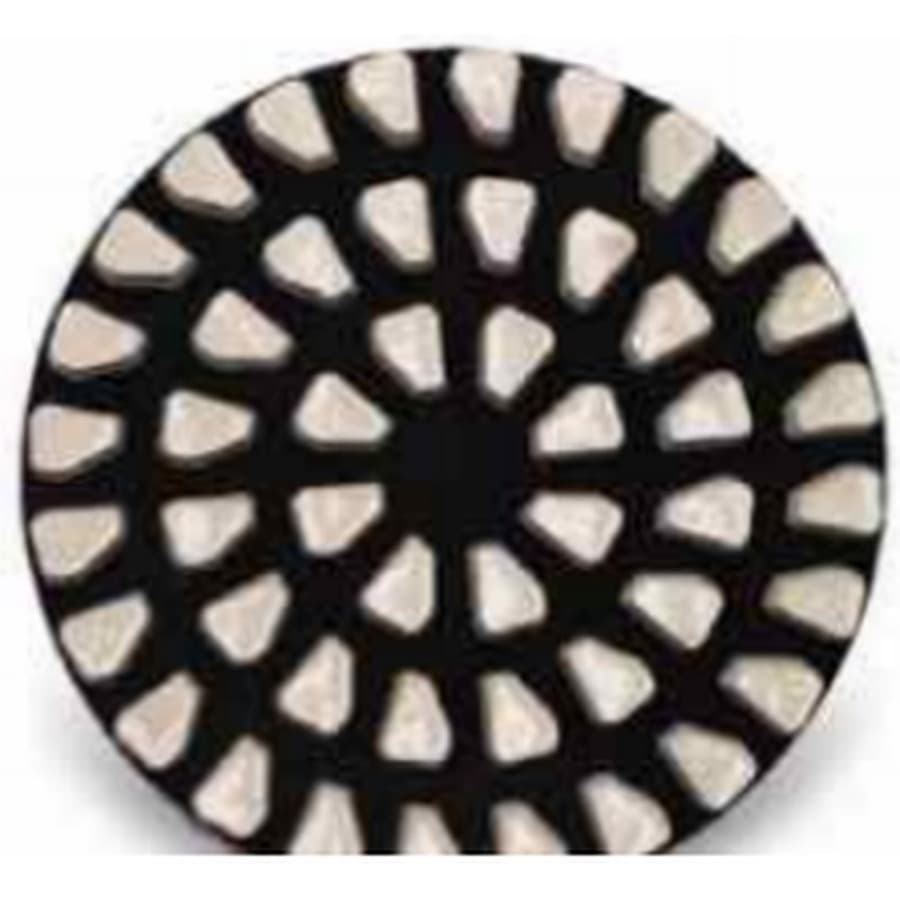
4'' Refined Polishing Pad (JOY-HP-01)
View specs →Need this tool for your job?
MOQ 1 · 7–30 days by order quantity · FOB & CIF · free sample on request
Author & Manufacturer
Written and reviewed by JOY TECH - an SGS & BV audited, CE/RoHS certified diamond tools manufacturer founded in 2004, exporting to 50+ countries.
Quality & Compliance
Our factory and quality management system are audited by SGS and Bureau Veritas. Products meet CE/RoHS requirements and every piece is 100% inspected before packing.
Verified Certificates
- • SGS Audited Supplier — Report No. QIP-ASI227442 & QIP-ASR247051
- • Bureau Veritas Verified — Report No. MIC-ASR257059
- • CE & RoHS Certificate of Conformity — No. CS240925001HRZ