

Grit Sequence for Thin-Mil Coatings Before Polishing
Grit Sequence for Thin-Mil Coatings Before Polishing
Quick Answer
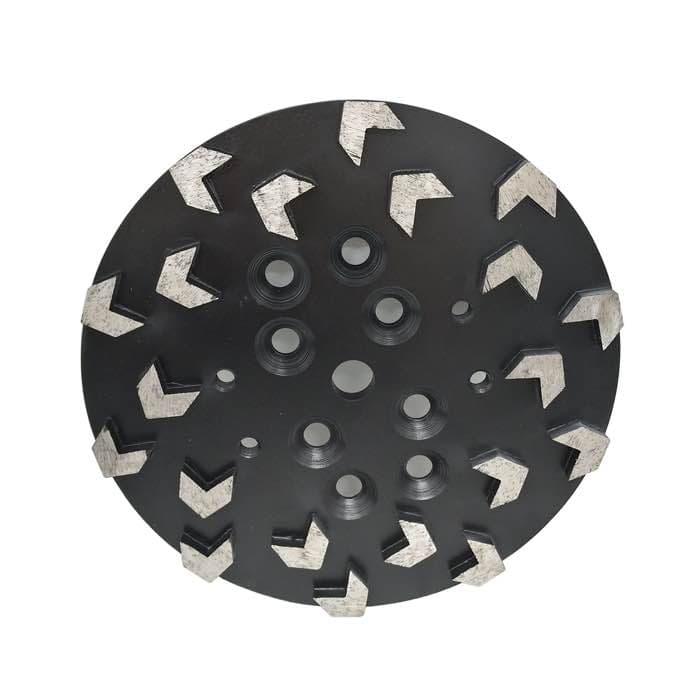
For a thin-mil coating (under 0.5 mm), start with 30/40 metal bond to remove the coating and open the surface, follow with 60/80 to even the scratches, then 120 and 200 resin before polishing. If the coating is soft or the concrete is soft, start at 60/80 to avoid gouging. Do not jump from 30/40 to 200; the intermediate grits remove the previous scratches and prevent a hazy finish.
Why Thin Coatings Still Need a Sequence
A thin coating may look easy to remove, but the coating residue can load a fine diamond. If you start at 120 resin, the resin pad polishes the coating instead of cutting it, and the floor becomes patchy. A metal-bond pass removes the film and exposes the concrete; the resin sequence then builds the clarity.
The coating also affects the bond choice. A hard, thin epoxy needs a 30/40 metal bond; a soft paint or sealer may clog a coarse grit, so a 60/80 with good extraction is better.
Standard Sequence
| Step | Tool | Purpose |
|---|---|---|
| 1 | 30/40 metal bond | Remove coating, open surface |
| 2 | 60/80 metal bond | Even scratches, remove residue |
| 3 | 120 resin | Start honing |
| 4 | 200 resin | Pre-polish |
| 5 | 400+ resin | Polish to target gloss |
When to Skip or Add a Step
If the floor is already flat and the coating is thin and soft, start at 60/80 and skip 30/40. If the coating is thick or there are multiple layers, use a PCD or a 16/20 metal bond first, then 30/40. If the concrete is hard and the 30/40 glazes, switch to a softer bond rather than adding pressure.
Do not skip 60/80 after 30/40 on a polished finish. The 60/80 removes the deep scratches; without it, the 120 resin has to work too hard and the finish stays hazy.
Coating Residue and Loading
Thin coatings can smear rather than chip. If the metal bond loads, reduce pressure and increase extraction. A loaded 30/40 will polish the coating and leave a shiny patch. Dress the segment on a hard block and test again. If loading persists, switch to a 60/80 with a softer bond.
Transition to Resin
Before the first resin pad, vacuum the floor and inspect for coating residue. A damp mop helps remove fine dust, but the floor must be dry before resin. If you see glossy spots, go back to 60/80; do not try to polish them out with resin.
Frequently Asked Questions
Q: Can I start at 120 resin on a thin coating?
A: No. The resin will polish the coating and leave patches. Remove the coating with a metal bond first.
Q: How do I know the coating is gone?
The surface should be uniformly matte and the concrete aggregate visible. Wipe with a cloth; no film or color should transfer.
Q: Do I need a 30/40 pass on soft concrete?
Only if the coating is hard or thick. On soft concrete, 60/80 may be enough and reduces the risk of gouging.
Q: Can I polish after a 200 resin pass?
Yes, if the clarity is acceptable. For a high gloss, continue through 400 and 800 or use a burnishing pad.
Conclusion
Thin coatings need a real sequence, not a shortcut. Remove the film with 30/40, even the surface with 60/80, then hone with resin. JOY TECH supplies EDCO 10-inch grinding discs and resin polishing pads for the full sequence.
Products used in this guide
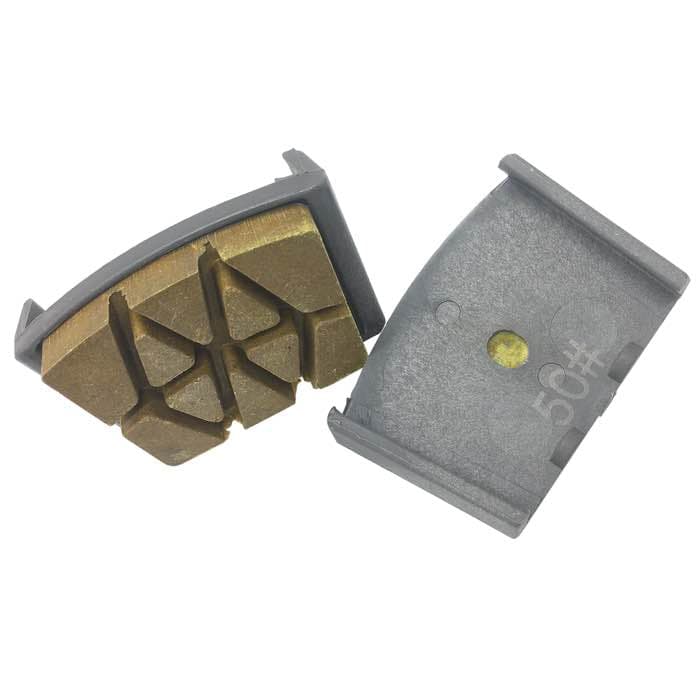
HTC Resin for Concrete Floor Polishing (JOY-HTC-Resin)
View specs →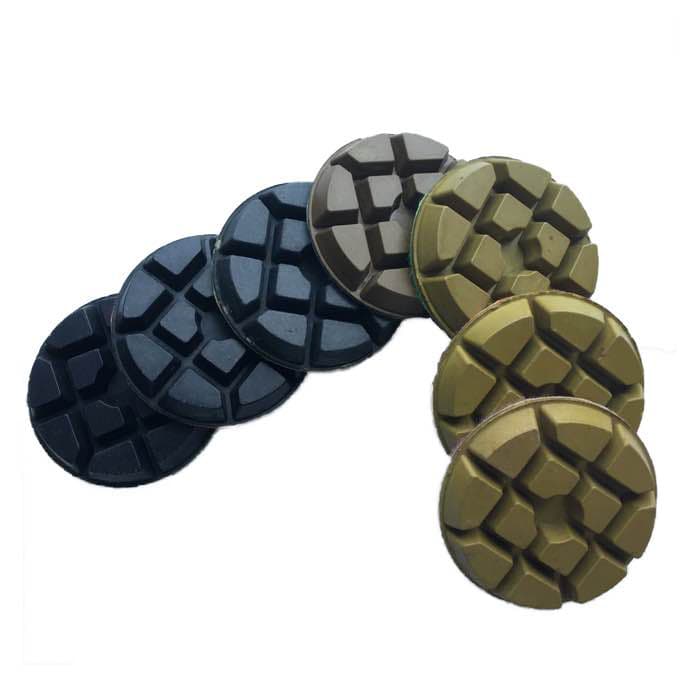
Diamond Resin Polishing Pads for Concrete Terrazzo Floor (JOY-RFP-01)
View specs →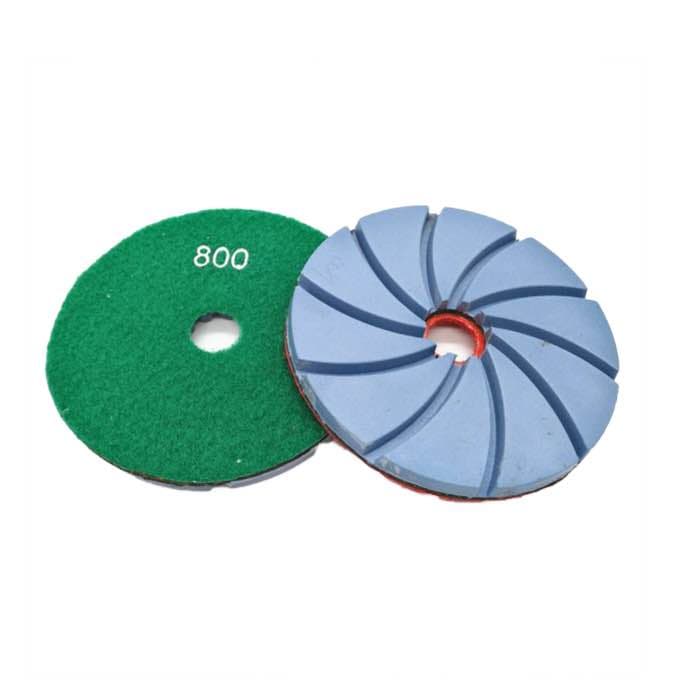
5''/125mm Diamond Resin Polishing Pads for Concrete Terrazzo Floor (JOY-RFP-S1)
View specs →Need this tool for your job?
MOQ 1 · 7–30 days by order quantity · FOB & CIF · free sample on request
Author & Manufacturer
Written and reviewed by JOY TECH - an SGS & BV audited, CE/RoHS certified diamond tools manufacturer founded in 2004, exporting to 50+ countries.
Quality & Compliance
Our factory and quality management system are audited by SGS and Bureau Veritas. Products meet CE/RoHS requirements and every piece is 100% inspected before packing.
Verified Certificates
- • SGS Audited Supplier — Report No. QIP-ASI227442 & QIP-ASR247051
- • Bureau Veritas Verified — Report No. MIC-ASR257059
- • CE & RoHS Certificate of Conformity — No. CS240925001HRZ