

Matching Grinding Disc Diameter to Grinder Head Size
Matching Grinding Disc Diameter to Grinder Head Size
Quick Answer
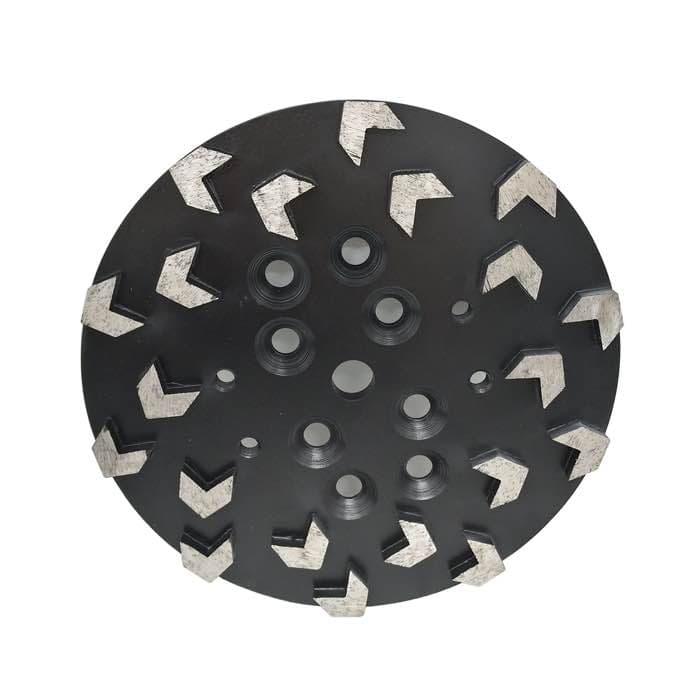
Match the disc diameter to the grinder’s designed head size, not to the largest disc that fits. A 250 mm head takes 250 mm discs; a 300 mm head takes 300 mm discs; a 480 mm planetary head usually takes three 250 mm discs. An oversize disc increases motor load, reduces edge reach and can hit the shroud; an undersize disc leaves gaps and wears the head unevenly.
Why Diameter Matters
The disc diameter sets the contact area and the rim speed. A larger disc has more diamond in contact, which needs more torque and can slow the motor on a hard slab. A smaller disc has less contact and cuts faster per unit pressure, but it takes more passes to cover the floor.
The disc also has to fit inside the shroud and clear the edge. If the disc is wider than the head, it can rub the shroud, overheat and throw the machine off balance. If it is too narrow, the head runs on the wrong wear pattern.
Common Head Configurations
| Machine type | Head size | Typical tooling |
|---|---|---|
| Hand-held angle grinder | 100-125 mm | 100-125 mm cup wheel |
| Single-disc floor grinder | 250-300 mm | One 250-300 mm disc |
| Dual-head grinder | 2 x 250 mm | Two 250 mm discs |
| Planetary grinder | 3 x 250 mm | Three 250 mm discs |
| Large planetary | 3 x 300 mm | Three 300 mm discs |
Coverage and Overlap
A 250 mm disc on a 250 mm head covers the full head width. On a planetary grinder, three discs overlap slightly as the head rotates; the overlap is designed into the machine. If you fit smaller discs, the overlap disappears and the floor develops ridges. If you fit larger discs, the overlap increases and the motor load rises.
For edge work, a smaller disc gives better reach under toe kicks and along walls. Keep a 100-125 mm cup wheel for edges even when the main machine uses 250 mm discs.
Motor Load and Hard Concrete
Oversize discs are most likely to stall on hard concrete or when the bond is too hard. The motor draws more current, the head slows and the segment glazes. If the machine bogs down, check the disc diameter and bond before blaming the motor. A 300 mm disc on a 250 mm head is a common mismatch that shows up as overheating and slow cutting.
Runout and Balance
A disc that is off-centre or has a worn hub will run out and vibrate. Check the disc on a flat surface and the hub for burrs. On a planetary grinder, all discs should be the same diameter and wear condition; a mixed set makes the head run unevenly and can damage the bearings.
Frequently Asked Questions
Q: Can I put a 300 mm disc on a 250 mm grinder?
A: Only if the manufacturer specifies it and the shroud clears. In most cases it overloads the motor and reduces edge reach. Use the designed size.
Q: Why do my discs wear unevenly?
A: Mixed diameters, a bent hub or a head that is not level. Check all discs and the head alignment.
Q: What size disc for a 480 mm planetary grinder?
A: Usually three 250 mm discs. Check the machine manual; some models use 300 mm discs.
Q: Does a larger disc cut faster?
A: It covers more area per pass, but it may cut slower per unit area because the motor load is higher. Total productivity depends on the machine and concrete.
Conclusion
Use the disc diameter the grinder was designed for, keep all discs on a planetary head matched, and reserve a smaller cup wheel for edges. JOY TECH supplies 10-inch EDCO grinding discs and 250 mm trapezoid discs for common head sizes.
Products used in this guide
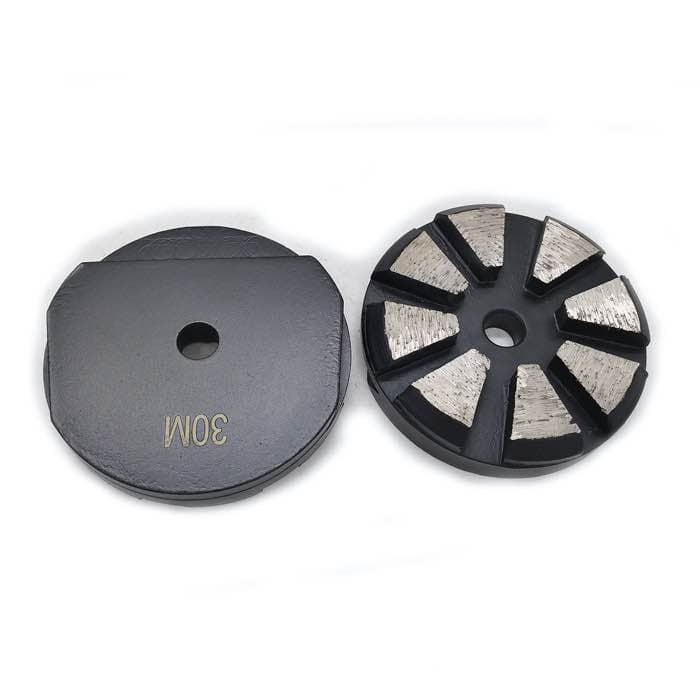
3'' Diamond Grinding Disc with 8 Segment for Lavina Floor Grinder (JOY-LVS-T8)
View specs →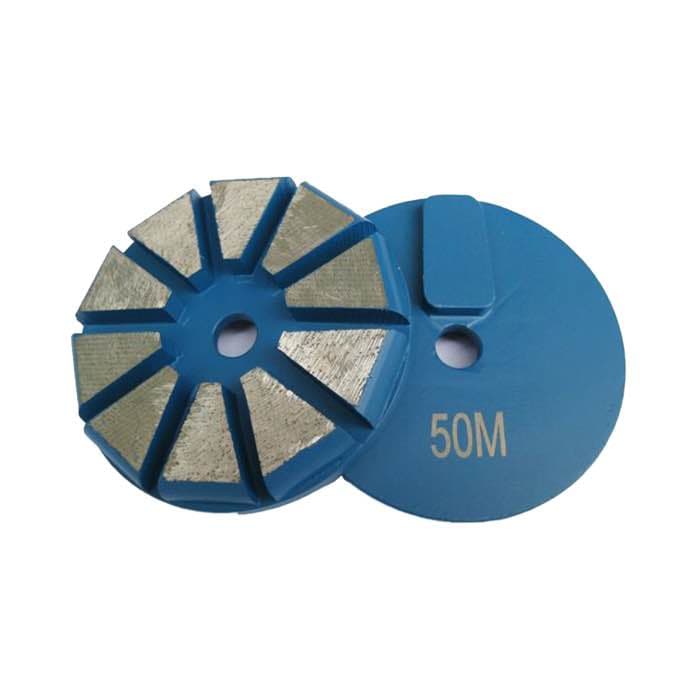
3'' Diamond Grinding Disc with 10 Segments for Husqvarna Floor Grinder (JOY-HQS-T10)
View specs →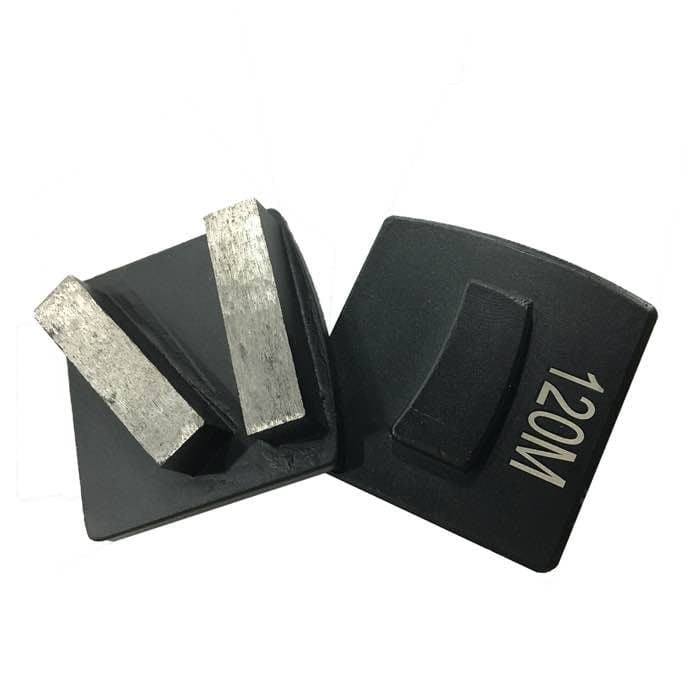
Klindex Double Bar Segment Quick Lock Diamond Grinding Disc (KLD-T2B)
View specs →Need this tool for your job?
MOQ 1 · 7–30 days by order quantity · FOB & CIF · free sample on request
Author & Manufacturer
Written and reviewed by JOY TECH - an SGS & BV audited, CE/RoHS certified diamond tools manufacturer founded in 2004, exporting to 50+ countries.
Quality & Compliance
Our factory and quality management system are audited by SGS and Bureau Veritas. Products meet CE/RoHS requirements and every piece is 100% inspected before packing.
Verified Certificates
- • SGS Audited Supplier — Report No. QIP-ASI227442 & QIP-ASR247051
- • Bureau Veritas Verified — Report No. MIC-ASR257059
- • CE & RoHS Certificate of Conformity — No. CS240925001HRZ