
Soft Concrete Grinding: Why Cup Wheels Load Up and Stop Cutting
Soft Concrete Grinding: Why Cup Wheels Load Up and Stop Cutting
Quick Answer
A cup wheel loads up on soft concrete because the bond is too hard for the abrasive paste, the operator is pushing too hard, or the dust extraction is insufficient. The segment cannot wear fast enough to expose new diamond, so cuttings pack into the metal matrix and the wheel stops cutting. Use a softer bond, reduce pressure, increase airflow and dress the wheel on a hard abrasive block.
Why Soft Concrete Is Different
Soft concrete has low compressive strength, high porosity and a weak surface paste. The diamond cuts easily, but the fines are fine and sticky. They fill the gap between the diamond and the bond, and the segment polishes instead of cutting. On a hard slab, the same wheel would self-sharpen because the bond wears against the abrasive aggregate.
Soft slabs are often found in old buildings, on poorly cured pours, and on floors with a high sand content. They also tend to have laitance and curing compound, which adds to the loading.
Signs of a Loaded Wheel
- The wheel feels smooth and slides instead of biting.
- The segment face is shiny or has a dark, glazed film.
- Dust production drops and the vacuum picks up less.
- The grinder speeds up because the load is gone.
- The cut rate falls even though the wheel looks “fine”.
Bond and Grit Selection
Use a soft bond with a coarse grit for soft concrete. A soft bond wears quickly and exposes new diamond; a coarse grit produces larger chips that are easier for the vacuum to capture. A hard bond and a fine grit are the worst combination on a soft slab.
| Concrete | Bond | Grit | Segment style |
|---|---|---|---|
| Soft, sandy | Soft | 16/20 or 30/40 | Open, single row |
| Medium | Medium | 30/40 | 12-arrow or turbo |
| Hard, dense | Hard | 30/40 or 60/80 | Segmented, aggressive |
Pressure and Machine Setup
Pushing harder does not fix loading; it increases heat and makes the paste stickier. Reduce head pressure, increase wheel speed within the manufacturer’s range, and let the diamond cut. On a planetary grinder, check that the head is floating and not resting its full weight on the wheel.
If the machine has water, use enough to flush the fines but not so much that the slurry floods the shroud. If dry, use a HEPA vacuum with good airflow and clean the filter; a clogged filter reduces airflow and causes loading.
How to Recover a Loaded Wheel
- Stop grinding and inspect the segment face.
- Dress the wheel on a hard abrasive block or a strip of hard concrete for 20-30 seconds.
- Reduce pressure and run at full RPM without load for a few seconds.
- Check vacuum airflow and empty the pre-separator.
- If loading returns immediately, change to a softer bond or coarser grit.
Preventing Loading on the Next Job
Test the slab hardness with a scratch or rebound hammer before choosing tooling. Grind a 1 m² test patch and watch the segment face. If it glazes, change the bond before you commit to the full floor. Keep a spare set of softer-bond wheels on the truck; soft concrete is common in renovation work.
Frequently Asked Questions
Q: Can I use a hard-bond wheel on soft concrete?
A: It will cut for a short time, then load and stop. Use a soft bond and a coarse grit instead.
Q: Does water help stop loading?
A: Water flushes fines and cools the segment, but too much water can float the machine. Use steady low flow, not a flood.
Q: How do I know the wheel is loaded rather than worn out?
A: A loaded wheel has a shiny, glazed face and cuts slowly; a worn wheel has low segment height but a rough, open face. Dress the loaded wheel first.
Q: Can I fix a loaded wheel with a brick?
A: A hard abrasive block or a patch of hard concrete works. A soft brick may not cut the glaze. Use a proper dressing stone.
Conclusion
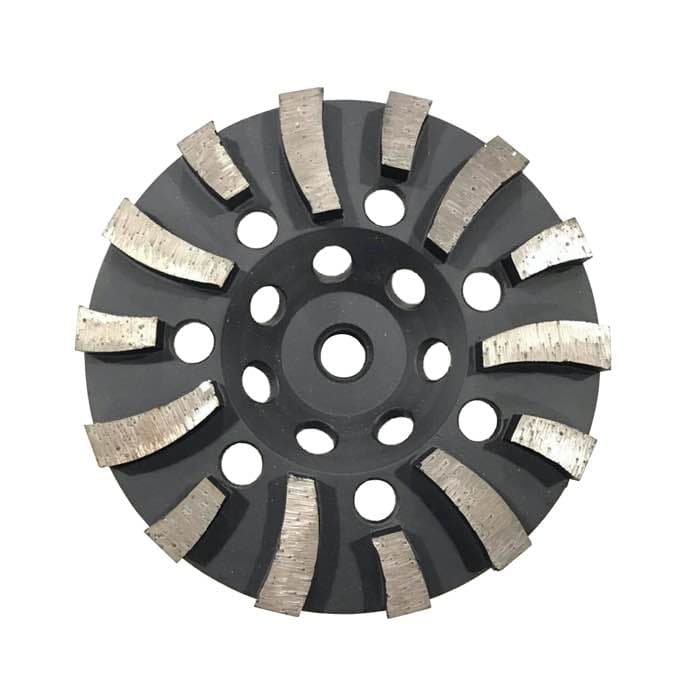
Soft concrete needs a soft bond, coarse grit and light pressure. If the wheel loads, dress it, check airflow and change the bond before the next pass. JOY TECH supplies hurricane cup wheels and 12-arrow cup wheels in soft and hard bonds for different slabs.
Products used in this guide
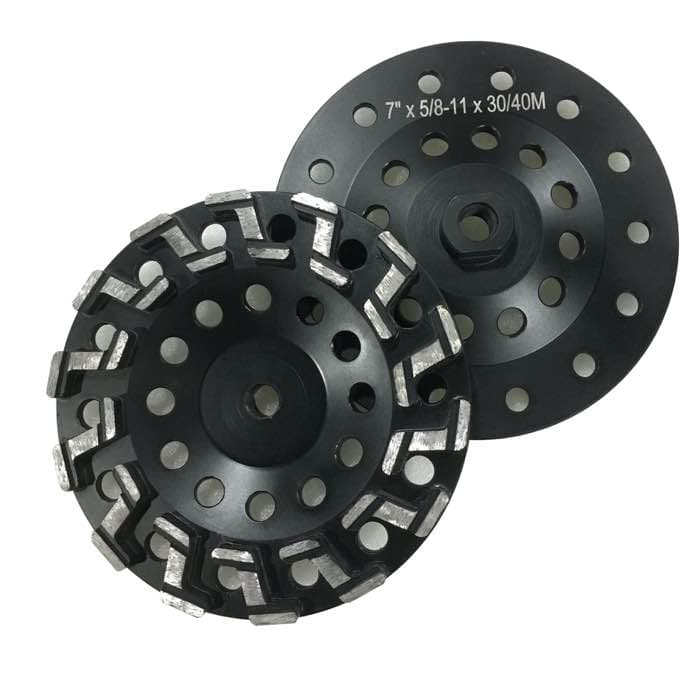
S Segment Diamond Grinding Cup Wheels (JOY-CW-S)
View specs →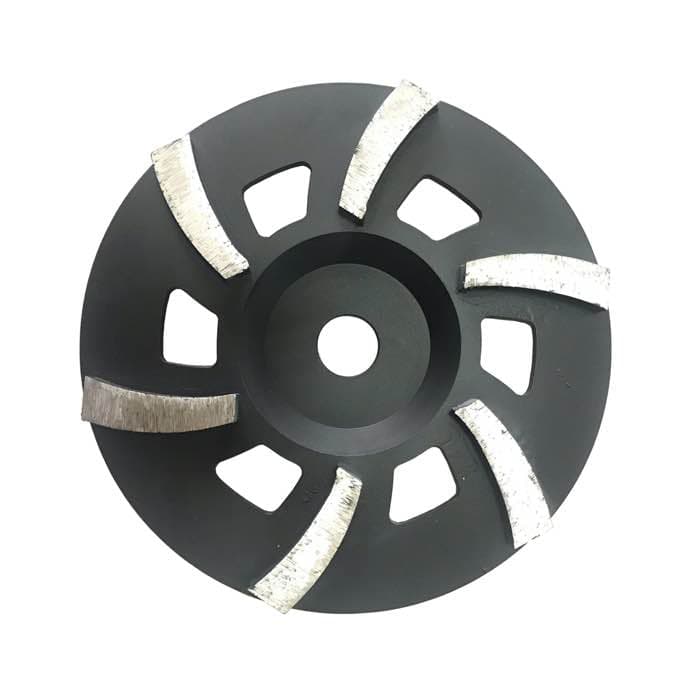
Spiral Segment Diamond Grinding Cup Wheels (JOY-CW-S2)
View specs →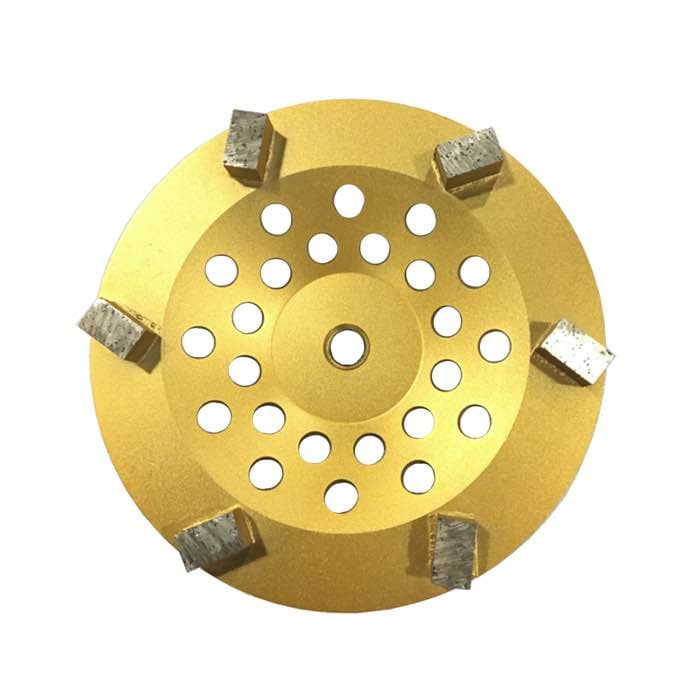
Diamond Grinding Cup Wheels with 6 Segment (JOY-CW-HB6)
View specs →Need this tool for your job?
MOQ 1 · 7–30 days by order quantity · FOB & CIF · free sample on request
Author & Manufacturer
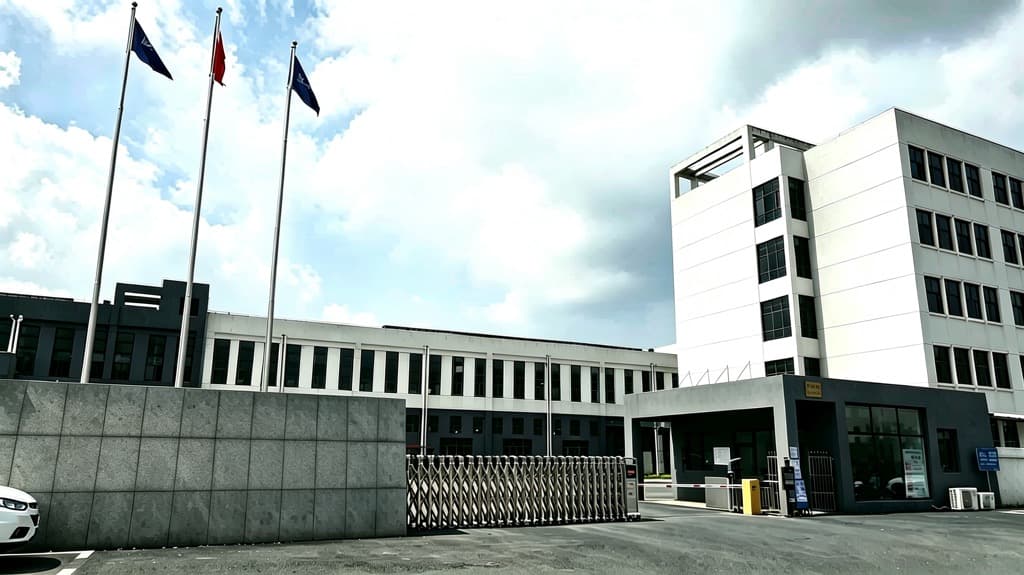
Written and reviewed by JOY TECH - an SGS & BV audited, CE/RoHS certified diamond tools manufacturer founded in 2004, exporting to 50+ countries.
Quality & Compliance
Our factory and quality management system are audited by SGS and Bureau Veritas. Products meet CE/RoHS requirements and every piece is 100% inspected before packing.
Verified Certificates
- • SGS Audited Supplier — Report No. QIP-ASI227442 & QIP-ASR247051
- • Bureau Veritas Verified — Report No. MIC-ASR257059
- • CE & RoHS Certificate of Conformity — No. CS240925001HRZ