

Trapezoid vs Rhombus Segments on Hard Aggregate Concrete
Trapezoid vs Rhombus Segments on Hard Aggregate Concrete
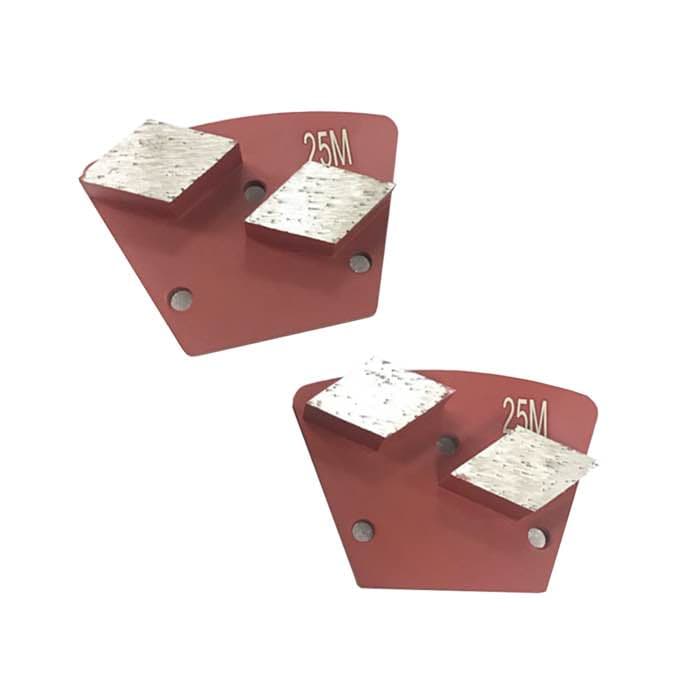
Quick Answer
On hard aggregate concrete, a trapezoid segment with a narrow leading edge penetrates faster and is less likely to glaze. A rhombus segment presents a broader, angled face that stays flatter and leaves a tighter scratch pattern, but it needs more power and can polish instead of cut on very hard stone. Use trapezoid for aggressive removal, rhombus for flatness and finish.
How Segment Shape Affects Cutting
The segment face is the only part of the disc touching the floor. Its shape controls contact area, unit pressure and how the cuttings escape. A trapezoid has a tapered leading edge; the pressure is concentrated at the front, so it bites into hard aggregate. A rhombus has a diamond-shaped face; the contact is broader and the load is spread across the surface.
On hard concrete, a broad face can glide over the aggregate instead of cutting it. The segment then polishes and the floor stays high. A narrow face concentrates force and fractures the aggregate, but it also wears faster and can leave deep scratches.
Trapezoid Segments: When They Win
- Hard concrete with granite or river gravel aggregate.
- Coating removal and aggressive surface prep.
- High-power grinders with enough weight to hold the segment.
- Floors that are out of flat and need stock removal.
Trapezoid discs are common in 3-segment and single-bar designs. They cut fast but can leave a directional scratch pattern that needs a follow-up pass with a finer grit or a rhombus disc.
Rhombus Segments: When They Win
- Medium to soft concrete where a broad face does not glaze.
- Finish prep before a coating or polish.
- Floors that need flatness more than stock removal.
- Lower-power machines that cannot push a trapezoid segment.
Rhombus segments are often used in multi-segment discs. They leave a tighter, more uniform scratch pattern and are easier to control on a wavy floor.
Hard Aggregate: The Deciding Factor
Hard aggregate is the main reason a trapezoid segment outperforms a rhombus. The narrow edge generates higher point pressure, which initiates cracks in the aggregate. A rhombus face spreads the load and may skate. If the floor is hard and the rhombus disc is not cutting, do not push harder; switch to a trapezoid or a softer bond.
| Floor | First choice | Follow-up |
|---|---|---|
| Hard aggregate, coating | Trapezoid, soft bond | Rhombus 60/80 |
| Medium concrete, flat | Rhombus, medium bond | Resin or burnish |
| Soft concrete, uneven | Rhombus, hard bond | Check flatness |
| Heavy stock removal | Trapezoid, coarse grit | Rhombus to blend |
Machine and Bond Matching
A trapezoid segment needs weight and torque. On a lightweight single-head grinder, it can bounce and leave gouges. A rhombus segment is more forgiving on a light machine but may not cut hard concrete. Match the bond as well: a soft bond with a trapezoid segment cuts hard concrete; a hard bond with a rhombus segment resists loading on soft concrete.
Frequently Asked Questions
Q: Can I use a rhombus segment on hard concrete?
A: Yes, with a soft bond and enough machine power. If it glazes or skates, switch to a trapezoid or a more aggressive segment.
Q: Which shape leaves a better finish?
A: Rhombus generally leaves a tighter scratch pattern. Trapezoid cuts faster but may need a follow-up pass.
Q: Do segment shape and grit work together?
A: Yes. A coarse grit on a trapezoid cuts aggressively; a finer grit on a rhombus leaves a smoother surface.
Q: Why does my trapezoid disc bounce?
A: The machine may be too light, the floor may be wavy, or the segment may be too aggressive. Check head weight and reduce depth.
Conclusion
Trapezoid for penetration and stock removal on hard aggregate; rhombus for flatness and finish. Match the shape to the floor, the bond and the machine. JOY TECH supplies trapezoid grinding discs and double-rhombus discs for both strategies.
Products used in this guide
Double Rhombus Segment Diamond Trapezoid Grinding Disc (JOY-TP-RH2)
View specs →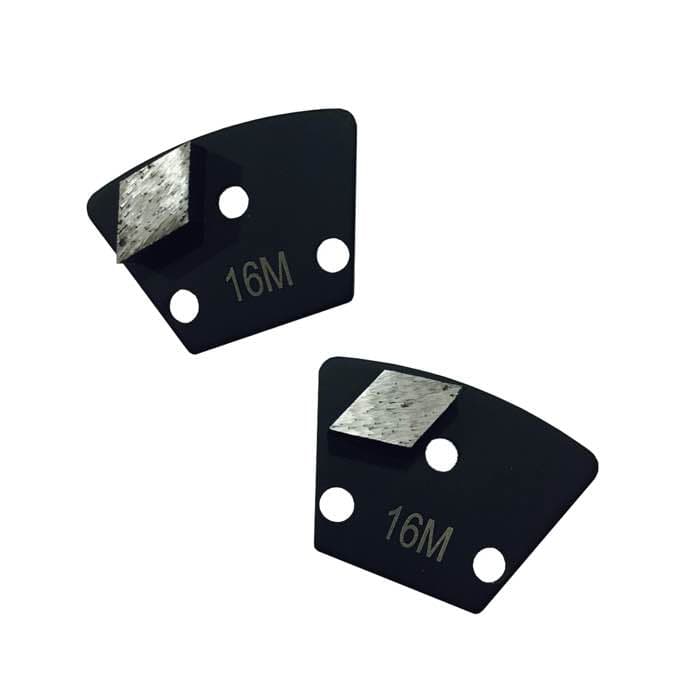
Single Rhombus Segment Diamond Trapezoid Grinding Disc for Iron Horse (JOY-TP-RH1)
View specs →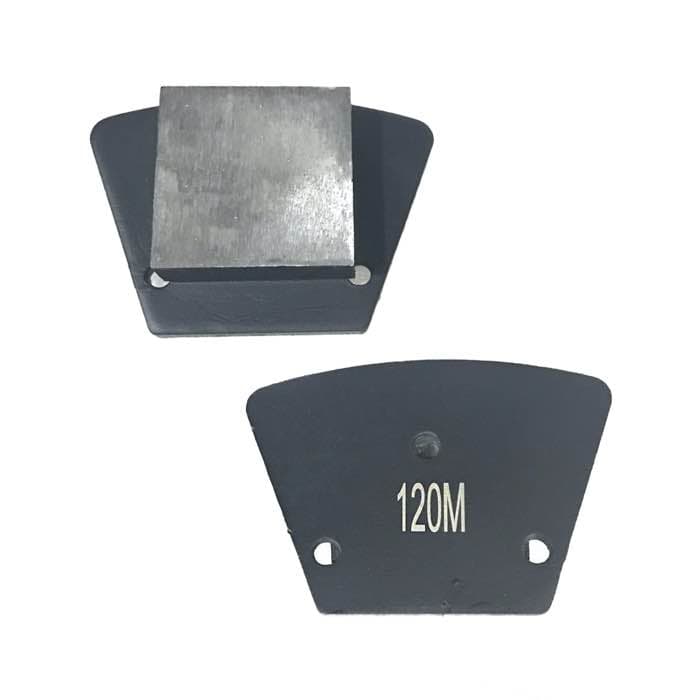
Block Segment Diamond Trapezoid Grinding Disc (JOY-TP-B)
View specs →Need this tool for your job?
MOQ 1 · 7–30 days by order quantity · FOB & CIF · free sample on request
Author & Manufacturer
Written and reviewed by JOY TECH - an SGS & BV audited, CE/RoHS certified diamond tools manufacturer founded in 2004, exporting to 50+ countries.
Quality & Compliance
Our factory and quality management system are audited by SGS and Bureau Veritas. Products meet CE/RoHS requirements and every piece is 100% inspected before packing.
Verified Certificates
- • SGS Audited Supplier — Report No. QIP-ASI227442 & QIP-ASR247051
- • Bureau Veritas Verified — Report No. MIC-ASR257059
- • CE & RoHS Certificate of Conformity — No. CS240925001HRZ